

By Rachel Myerson, The Nosher
Yom Kippur break-the-fast has ballooned into a significant event in the Jewish calendar. Though menus have become more extravagant, for many Ashkenazi Jews, the heart of the meal are the classics — bagels, smoked fish, blintzes and cake.
Outside the Ashkenazi community, however, there are different, centuries-old break-the-fast traditions that might even tempt you to ditch the bagels!
Iraq
Iraqi Jews know that you can’t beat a drink and bite of something sweet post-fast, so they turn to crumbly, date-filled cookies and hariri — a homemade sweetened almond milk that’s often flavored with cardamom.
Once that’s settled in the stomach, many embark on a full-on meat meal, like t’beet — a stuffed chicken and rice dish flavored with a mix of warm spices that’s prepared pre-fast and cooked low and slow.
Morocco
Instead of coffee, Moroccan Jews opt for mint tea accompanied by marzipan cookies or fijuelas, fried pastries dipped in sweet syrup, before diving into a feast. Many prepare the hearty soup harira — also a traditional iftar food during the Islamic Ramadan fasting period — featuring chickpeas or lentils, lemon, cilantro and often chicken or beef.
Others turn to traditional Shabbat dishes like dafina (or skhina), a cholent equivalent, flavored with saffron and stuffed with all kinds of delights — marrow bones, chickpeas, eggs, meatloaf, rice, the list goes on!
Iran
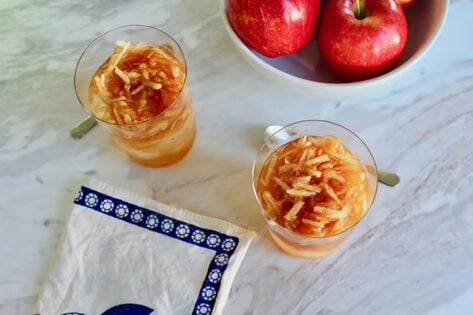
Persian Jews keep it simple with black tea, drunk alongside a soft-boiled egg and faloudeh seeb — a refreshing apple-rosewater treat that’s somewhere between a drink and a dessert.
Greece
Similar to Iraqi hariri, Greek Jews break their fast on a traditional homemade beverage called pepitada. Made from toasted melon seeds that are blended with water, sweetened with honey or vanilla, and flavored with rosewater or almond extract, this unique concoction is an excellent thirst-quencher.
A version of the classic avgolemono chicken soup called sopa de huevos y limon is a Yom Kippur staple, eaten either before or after the fast.
Syria
Like Moroccan Jews, Syrian Jews opt for the “more is more” approach. Stone fruits feature heavily: refreshing apricot water rehydrates the weary; dried apricots and plums are mixed with rice and ground beef and stuffed inside zucchinis; sour cherries paired with tamarind make a sweet-sour sauce for meatballs.
Others choose to ditch the meat in favor of sambusek, triangular turnovers stuffed with cheese, spinach or chickpeas.


