
By Mary Grossman
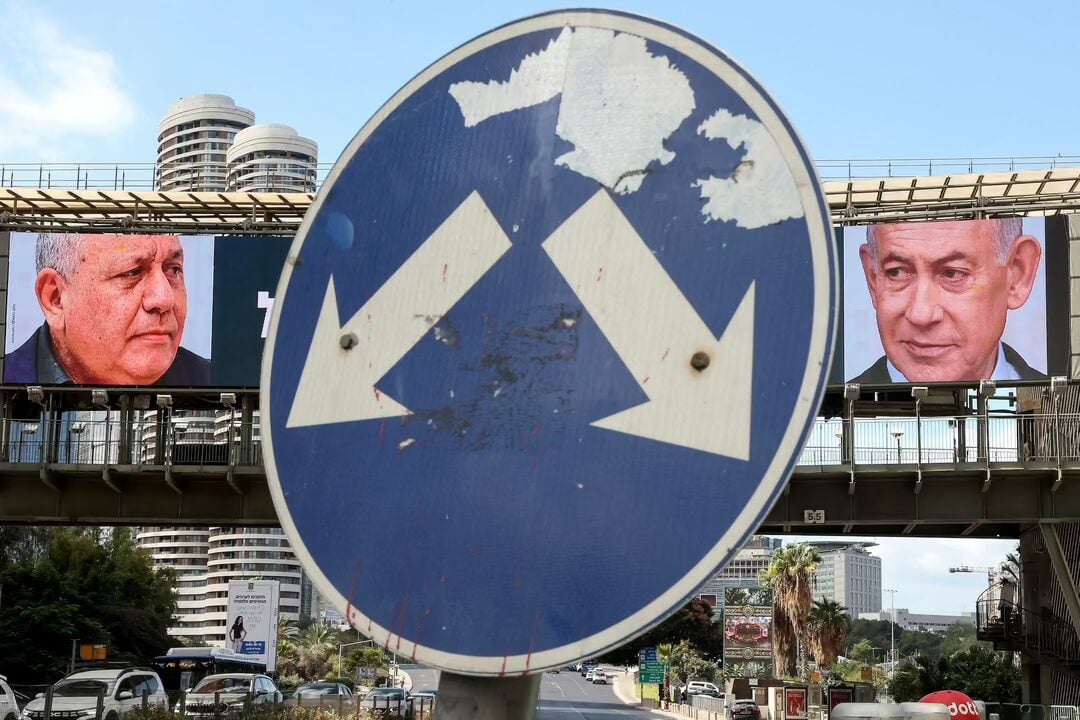
TEL AVIV, Israel — It was a hazy Mediterranean Sunday morning when my plane landed at Ben Gurion Airport, two days before Israel’s Oct. 27 election.
As we taxied toward the terminal I activated my Israeli SIM card. Almost immediately, my phone rang. “Shalom, this is Itamar Ben-Gvir,” followed by an inaudible rant. I hung up, thinking he sounded more like a drunk friend who had accidentally butt-dialed me.
I got in my cab, and my Gett driver was eager to talk politics 30 seconds into my ride to my flat in the Kerem (Yemenite Quarter in Tel Aviv).
“Who’s going to win?” I asked.
“Bibi, of course.” OK, I nodded along. Thinking, he’s probably right.
Only Benjamin Netanyahu, he insisted, could “finish the job.” The Left never has anything to offer and is “weak babies,” he said, mimicking a baby crying in the review mirror. I laughed.
I asked him about the controversy over ultra-Orthodox men avoiding military service. He saw a double standard. Secular men in Tel Aviv avoid the draft too, he argued, some by claiming to be gay or not fit for service.
In his view, both groups were avoiding the same obligation, so why single out haredim? He acknowledged that ultra-Orthodox communities receive government subsidies, but said he’d rather see his tax dollars go to them than to Arab communities he believed did not support their own country.
“If Bibi gets rid of Hamas, Iran and makes peace with Lebanon, I’ll be happy,” he said.
I asked him about the reports of dual-citizens flooding home to vote and whether he’d encountered any returning voters in his cab.
Not one, he said on Sunday. “It’s just propaganda from Channels 12 and 13.”
An hour later on the beach, I noticed a disproportionately large number of pasty-looking Anglos wading in the waves. They were everywhere. I was beginning to believe the rumors.
I was looking forward to voting in my first Israeli election, unsurprisingly one that had captured the world’s attention.
I was also curious what a mix of Israelis, immigrants and dual citizens, some living here and others abroad, thought was at stake in this election.
As a former newspaper publisher who has covered my share of supposedly transformative elections, I arrived skeptical that this “historic” election would change anything. Yet here I am, thousands of miles and dollars away, casting my first ballot as an Israeli citizen.
Alicia, a Canadian immigrant marking her 10th anniversary of making aliyah, stressed the importance of voting. In an Instagram post that caught my eye, she chastised fellow immigrants (olim) who enjoy Israel but don’t take its politics seriously.
“It’s not cool to move here just for the beach and the food and the nightlife and the pride parade but ignore the policies that influence every part of our lives,” she wrote on Instagram.
She also welcomed Israelis returning from abroad to vote.
“Personally, I think it’s their right and their duty,” she told me.
Alicia, a critic of Netanyahu, thinks Israel is at a critical point regarding its democratic future. She hopes for political change but acknowledges that healing the country’s divisions could take generations.
My friend Ronnie, a lifelong Israeli who lives in Tel Aviv, sees expatriate voting quite differently.
“I think people who live abroad for more than a certain period, let’s say five years, should not have the right to vote,” he said.
“They don’t run to the bomb shelters. Their children aren’t in the army.”
Ronnie isn’t necessarily rooting for Netanyahu. He was considering Lieberman or Bennett and said he wouldn’t be troubled if Likud lost power. His objection is more fundamental: Why should people living overseas help determine the government under which he must live?
“They don’t understand it. They don’t touch it. They don’t smell it. They don’t feel it.”
Dana (a pseudonym), an American-born Israeli chef who has lived in Tel Aviv for years, has grown wary of people abroad who speak with certainty about Israeli politics.
“I personally didn’t really understand until I lived here,” she said.
Still, she supports expatriate citizens returning to vote, particularly those who might move back if the government changes.
Her biggest concern is the exemption of ultra-Orthodox men from the Army. She wants them to contribute equally as the secular population. She, as well as many Israelis, also wants an independent inquiry into the Oct. 7 massacre, answers about what went wrong, and a chance for a deeply divided country to begin healing.
Election Day itself is a national holiday. The street below is usually awash with the clatter of Carmel Market; today, Oct. 29, you could hear a pin drop. The day also provides an opportunity for family visits, barbeque parties or a coveted weekday run or hike.
My social media feed looked like a homecoming party. Israelis were posting photos of their flights back to vote. It seemed as though every Israeli on the planet had returned.
My polling station, or kalpi, as they are called here, was a tiny community center at the end of my tree-lined cobblestone street in the Kerem. My friend and landlord and her two adult children and their Australian Shepherd came with me, also to vote.
The lines were long, and we waited about 30 minutes among the neighborhood’s mix of young secular parents, Mizrahi locals and tattooed Tel Aviv counterculture. Many said they’d never seen such a crowd.
The process turned out to be quite straightforward once inside. Only one voter at a time could proceed before a panel of about seven polling representatives.
I showed them my Israeli ID. Friendly English-speaking volunteers checked me off their list, gave me a blue peel-and-stick envelope and pointed me to the one booth.
Before me was a ballot slip tray with a small stack for each party. I selected the slip bearing my party’s Hebrew letters (I voted for Eisenkot), sealed it in a blue envelope and dropped it into the ballot box under the watchful eyes (and cheers) of election officials and party representatives.
This fraud-proof method took less than a minute.
No voting machines. No mail-in ballots. Just a piece of paper, an envelope and visual verification that YOU indeed voted.
When the polls close at 10 p.m., it’s over save for special ballots from soldiers and diplomats.
That afternoon, Middle East security analyst Dr. Eric Mandel, a US-based client of mine and guest panelist on i24NEWS, invited me to accompany him to the studio for the start of the network’s all-night election coverage.
Voter turnout reached 77.7%, the highest since 1999. Surely that meant something transformative was happening.
By the time night fell, preliminary exit polls from leading pollsters showed the opposition bloc in a good position. Arab-led parties also appeared headed for a historic showing between the Joint List and Ra’am.
Yet, by the following evening, with roughly 86% of votes counted, the mood turned a bit subdued for left-wing voters as the situation grew more complicated. Netanyahu’s right-wing and religious bloc was projected to win 53 seats, compared with 48 for the main opposition bloc.
Neither had the 61 seats required for a parliamentary majority. Pollsters, who had predicted Eisenkot over Netanyahu, were coming under fire, accused of bias and incompetence.
The Arab vote stood out as the most surprising aspect. An extraordinary turnout in Arab communities put Arab-led parties on course for 19 seats, surpassing their previous record of 15.
They could now play a decisive role in determining who governs, but most Jewish-led parties may be unwilling to form a coalition with them.
Netanyahu may have survived another political reckoning, but his path to a governing majority remains uncertain at the time of writing.
Coalition negotiations, a unity government or even another election are all possibilities.
No matter the final outcome, the experience gave me a renewed appreciation for Israeli democracy. As a country often accused of apartheid, I found it particularly striking to see Arab parties possibly holding significant influence in the government.
I was also inspired by how Israelis discussed politics during an important election. Unlike in the US, where admitting how you voted can invite a wrath from your yoga studio, family excommunication or worse, people here seemed perfectly comfortable discussing who they voted for without demanding that you agree.
“Who did you vote for?” my friend asked neighbors as we walked back from the kalpi. They enthusiastically shouted back, Bibi! Or Lieberman! Or Eisenkot! Or “Ani lo yodea!” — “I don’t know!”
Open disagreement is a defining feature of Israeli culture, but over the many years I’ve been coming here, I’ve witnessed a growing trend in ideological intolerance, perhaps imported from Western countries like the US and Northern Europe.
I came expecting yet another election that could promise change but would most likely result in political deadlock or another election.
But I hadn’t expected to come away so impressed by the voters themselves.
My friend Ronnie may remain convinced that expats should steer clear of Israeli elections and I understand his argument. But lucky for me we’ll argue about it, while watching the sunset over the Mediterranean, sipping Aperol spritzes; picking at a dish of roasted walnuts. No big deal.
I look forward to coming back to vote in the next election.
Mary Grossman is the executive director of Jackson Hole Jewish Community in Jackson, Wyo. She founded and published Planet Jackson Hole, 2002-2015.


