

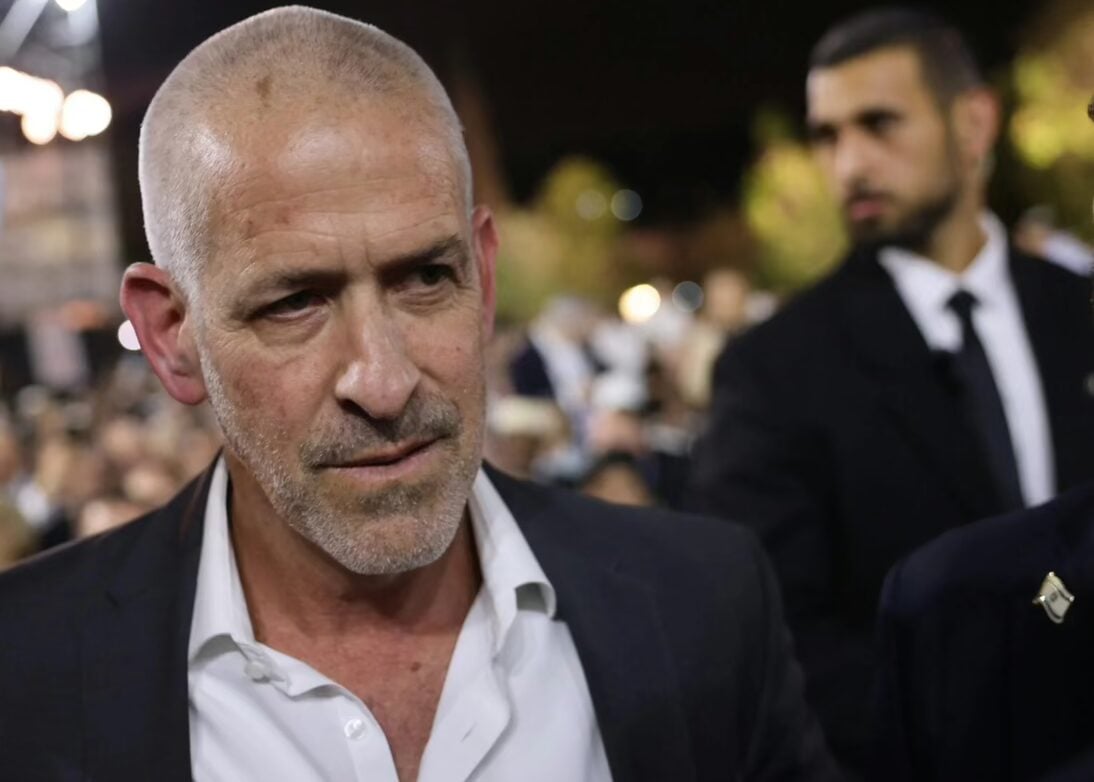
The bitter battle rages between Israel’s security and political establishments over who bears responsibility for the failures ahead of the Oct. 7 attacks. Its first election since the Hamas invasion in 2023 is Oct. 27.
Former Shin Bet chief Ronen Bar filed a defamation lawsuit against Israeli Prime Minister Benjamin Netanyahu, who blamed the intelligence head for the failures leading up to the attack, and for failing to awaken him early on the morning of Oct. 7, when, Netanyahu has said, he could have stemmed the attack.
Bar in his lawsuit lists a litany of occasions Netanyahu allegedly ignored or rejected advice that might have prevented the attacks.
Bar also acknowledged his own failures prior to Oct. 7.
In the run-up to the election, Israeli media have been preoccupied with reports of intelligence that was purportedly shared with top government officials ahead of the attacks.
What Netanyahu knew about the Hamas threat before the invasion — and when he knew it — has become a central issue in the campaign.
Gadi Eisenkot, leader of the Yashar party and Netanyahu’s leading challenger, said in response to the lawsuit, “Netanyahu was warned and did not act,” and that he would not allow Netanyahu to “evade the truth.”
Opposition leader Yair Lapid said that “Netanyahu can no longer claim that he didn’t know.”
Yair Golan, leader of the left-wing “The Democrats” party, said Netanyahu’s responsibility for “the worst massacre in Israel’s history is direct and clear.”
However, many political and security leaders who were in charge before Oct. 7, 2023 assumed responsibility and left their posts:
• Shin Bet chief Ronen Bar
• IDF Chief of Staff Herzi Halevi
• Defense Minister Yoav Gallant
•Military intelligence chief Aharon Haliva.
Not Netanyahu. He has rejected accusations that he is responsible for the failures even as he has prevented the establishment of a state commission of inquiry to investigate those responsible.
He has argued that such a commission, whose members would be appointed by the president of the Supreme Court, would be biased and would not enjoy public trust.
Beyond blaming the security establishment, Netanyahu has also sought to shift responsibility onto political rivals and previous governments.
He has pointed to the actions, or failure to act, of political opponents, including Eisenkot, Naftali Bennett and Benny Gantz, when they held senior positions.
Netanyahu has also pointed to Israel’s 2005 unilateral withdrawal from the Gaza Strip as a factor that contributed to the Oct. 7 massacre.
In Ronen Bar’s lawsuit itself, he sets out more than 12 alleged warnings he gave Netanyahu before the attack, as well as Netanyahu’s alleged refusal to adopt Bar’s recommendations for offensive action in the months leading up to the massacre.
For example, Bar said he presented Netanyahu in January, 2023 with his assessment that Hamas leader Yahya Sinwar wanted a multifront campaign against Israel.
In February, 2023, Bar allegedly sent Netanyahu a personal letter warning that terrorist organ- izations saw an opportunity to act and that the combination of Israel’s internal divisions and instability in the Palestinian arena could bring the country closer to a “perfect storm.”
In July, 2023, Bar said he told Netanyahu directly that he was conveying a strategic warning of war.
In September, 2023, Bar allegedly warned that Hamas wanted to escalate the conflict during October.
Netanyahu responded to the lawsuit in a post on X, addressing one of Bar’s specific claims: that he had never given Bar his personal phone number.
“Ronen, are you serious? You had my red phone number and could have called me immediately, as all heads of the security establishment do,” Netanyahu wrote.
“How many lives could we have saved if only you had called in time.”
Netanyahu has claimed recently that had security officials awakened him earlier on Oct. 7, he would have stemmed the attack.
Bar’s suit also alleges that he consistently recommended initiating offensive operations against Hamas, including a “preemptive strike” and targeted killings.
According to the lawsuit, Netanyahu strongly opposed those recommendations. Bar also said Netanyahu reprimanded him for dealing with “strategy.”
“The defendant had been in a state of slumber for many long months beforehand and refused to wake up despite the alarm bells the plaintiff sounded in his ears incessantly,” the lawsuit alleges, alluding to Netanyahu’s plaints that he was not awakened early on Oct. 7.
The defamation claim focuses in particular on a post Netanyahu published on X late last month, in which he claimed that Bar “knew about the real danger” in the early hours of Oct. 7 but chose not to wake him or take other preventive measures.
Netanyahu accused Bar of trying to shift responsibility for “all of Ronen Bar’s failures and crimes” onto him.
In a press statement after filing the suit Oct. 24, Bar called Netanyahu’s post a “blood libel” and announced that he was suing for 3 million shekels ($968,500) in damages and seeking a correction of Netanyahu’s statements.
Bar emphasized in the lawsuit that he was not seeking to absolve himself or the Shin Bet of responsibility for the failures that led to the Oct. 7 massacre.
Rather, he said, the suit was a response to Netanyahu’s attempt to “shift the responsibility exclusively onto Bar.
“I waited quietly for three years for the establishment of a commission of inquiry that would finally expose the Shin Bet’s work, alongside its failures, in the face of an ongoing blood libel,” Bar said.

