

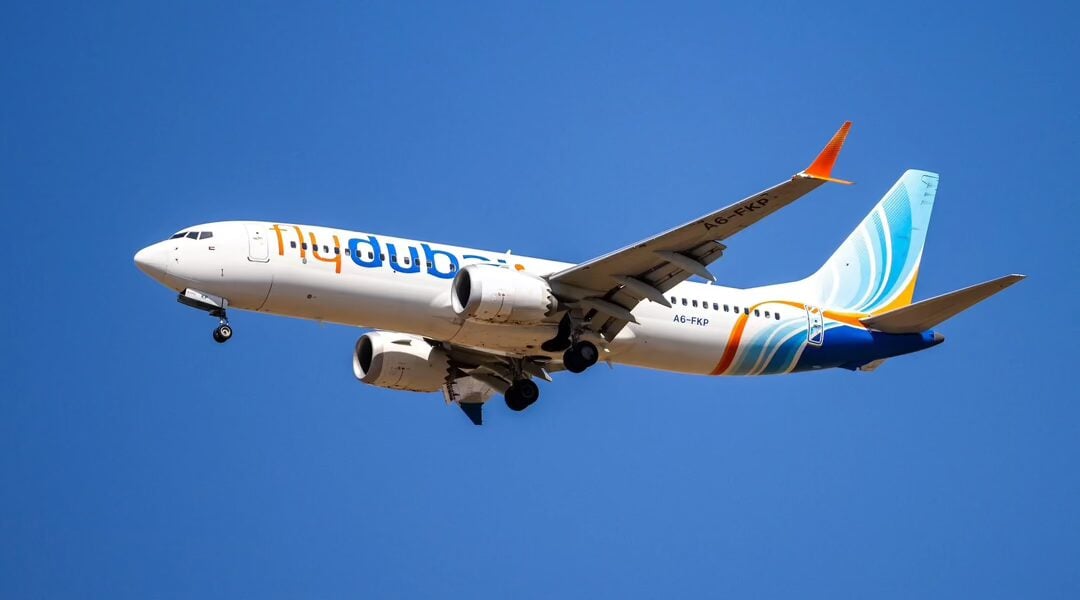
Major security lapses in three countries preceded the near, deliberate crash of Fly Dubai flight #1073, Sept. 30: Oman, Dubai and Israel.
The nature of these lapses is based on reports by JTA and the Wall Street Journal:
Oman: The saboteur, Hamam al-Hammami, was an Omani national. He had applied to and been accepted by a state carrier, Oman Air. The airline banned him from flying after discovering his online interests, which included in radical Islamic ideology. The airline sent him to a deradicalization program.
Oman’s security lapse was this:
It did not inform other airlines, including arlines in the Gulf, of al-Hammami’s disqualification as a pilot by Oman Air. When he was hired by FlyDubai, the UAE arline was not told of al-Hammami’s status at Oman Air.
United Arab Emirates: When it hired al-Hammami, it did not vet him with Oman Air. FlyDubai did know that he had been forbidden to fly, had been reassigned to a desk job, and had been sent to a deradicalization program.
UAE’s security lapse was the mirror image of Oman Air’s: FlyDubai didn’t ask, and Oman Air didn’t disclose.
Israel: Israel policy is not to allow a foreign airline to land in Israel if it employs a person whose country does not have diplomatic relations with Israel, out of fear of just the kind of incident that was attempted on Sept. 30.
How, then, did Israel allow FlyDubai to fly to Israel using an Omani pilot, especially since Israel required foreign airlines to submit in advance of any flight a list of passengers and crew?
Israel’s security lapse was this: pass the buck. Israel’s Ministry of Transportation said it didn’t have the authority to vet flight crews — it was FlyDubai’s responsibililty, or, it was the Israel Tax Authority’s responsiblity, or, it was the responsibility of the Shin Bet or Mossad.
“A classified May, 2024 report by Israel’s comptroller general warned Israel’s aviation security had grown lax . . . responsibility for security in Israel was fragmented, and the lines of responsibility weren’t always clear,” reported the WSJ.
The near disaster could test the relationship between Israel and FlyDubai, one of the airlines that has come to symbolize the ties forged by the 2020 Abraham Accords, in which the UAE was one of four Arab countries that recognized Israel.
The airline operates dozens of flights between Tel Aviv and Dubai each week.
Israel’s Transportation Minister Miri Regev has reportedly asked Prime Minister Benjamin Netan-yahu to immediately suspend FlyDubai flights to Israel until the circumstances of the incident are clarified, according to Ynet.
Regev said FlyDubai had violated the countries’ aviation agreement, which required pilots operating flights to Israel to be citizens of countries with which Israel maintains diplomatic relations.
Former Israeli ambassador to the UAE Amir Hayek pushed back. He wrote on X that FlyDubai and Etihad were the only two airlines in the world that continued flying to Israel “even during the most difficult times,” and argued that the UAE and the airline should be allowed to fully investigate what happened rather than face action based on speculation.
“I trust them,” he wrote.
Despite Israel’s reported desire to conduct the investigation, UAE is conducting it.
FlyDubai, a government-owned airline, began operating in 2009 and launched regular flights to Israel in 2020, shortly after the UAE and Israel established diplomatic relations.
When war broke out in Israel in October, 2023, many foreign airlines suspended flights to the country for extended periods.
FlyDubai and other UAE airlines continued operating flights to and from Israel through much of the conflict, providing an important connection for Israelis seeking to travel abroad at a time when international air service to the country was severely reduced.
Through Dubai, passengers can connect to destinations across Asia, Africa and other regions — 214 destinations in more than 100 countries.
According to Ben Gurion Airport data for August, FlyDubai carried roughly 90,000 passengers during the month.
FlyDubai is third among international airlines operating at the airport by passenger volume.


 and Israel.)