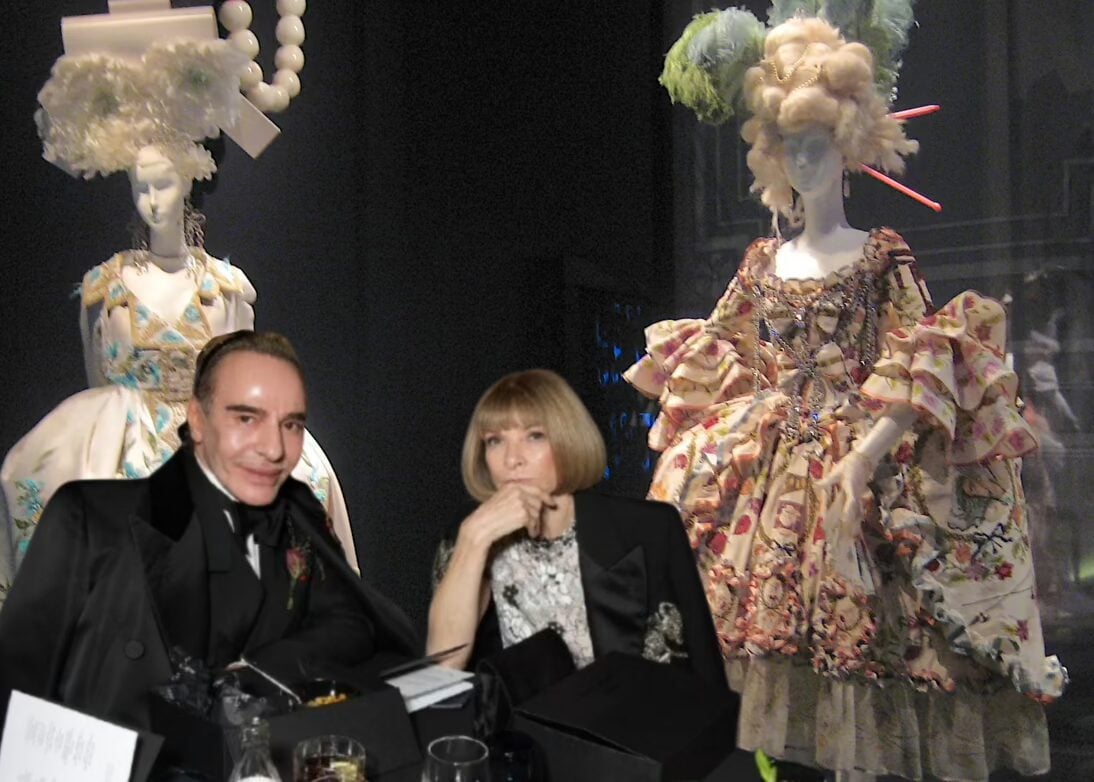
John Galliano withdrew from a planned exhibition of his work at the Metropolitan Museum of Art in response to an escalating controversy over the museum’s decision to honor the fashion designer despite his history of anti-Semitic and racist remarks.
Galliano said Aug. 31 that, after discussions with the Met and others involved in the exhibition, he had decided that it was best for the show not to take place “at this time.”
He said he remained accountable for the pain caused by his past words, particularly to Jews and Asians, and recognized that an exhibition honoring his work could be painful for some.
The Met said it agreed with his decision.
The reversal came less than a month after the Met announced that Galliano would be the subject of its spring 2027 Costume Institute exhibition, a rare honor that would have made him only the third living designer to receive a solo show there.
The exhibition was to open in conjunction with the Met Gala, one of New York’s biggest annual cultural and celebrity events.
Early public pushback against the honor came from Dana Thomas, Galliano’s biographer, who wrote Aug. 6 in The New York Times that the Met had made a serious error in choosing to honor him. The criticism then broadened, with Jewish leaders, museum donors and New York politicians publicly urging the museum to reconsider.
Jewish politicians criticizing the exhibition included New York City Council Speaker Julie Menin, who called the decision deeply painful for Jewish New Yorkers, and Micha Lasher, an assemblyman who represents the Upper West Side.
“This is not a freedom of expression issue,” Lasher, the Democratic nominee for the Manhattan congressional seat being vacated by Jerry Nadler, told the Times.
“This is a judgment issue, and I am baffled that anyone saw this as anything other than a terrible idea that would amount to the normalization of anti-Semitism.”
Prominent Met donor Alice Tisch described the planned exhibition as a “whitewash,” according to the Times.
The reversal is a setback for Anna Wintour, Condé Nast’s chief content officer and the driving force behind the Met Gala. She had championed Galliano for decades and was among the Met figures most closely associated with bringing the exhibition to the museum.
The controversy was complicated by the fact that some prominent rabbis had actually met with Galliano before the exhibition was announced and had come away believing that his repentance was sincere.
They told the museum that if it proceeded with the honor, it had a responsibility to make Galliano’s anti-Semitic conduct and the lessons of his repentance an explicit part of the exhibition.
Andrew Bolton, the Costume Institute’s curator, said in announcing the exhibition that it would address Galliano’s anti-Semitic and anti-Asian conduct, as well as his firing from Dior, a hate speech conviction in France and his subsequent treatment for addiction and public acknowledgment of his actions.
Galliano, among the most celebrated designers in the world, was fired by Christian Dior in 2011 after a video surfaced showing him praising Hitler and making anti-Semitic and anti-Asian remarks in a tirade in a Paris café. A French court convicted him of making public insults based on race, religion and ethnicity.
After entering treatment for substance abuse, he embarked on a process of rehabilitation and eventually returned to the fashion industry.
Abraham Foxman, then national director of the ADL, met privately with Galliano repeatedly; in 2013 the ADL said that Galliano had demonstrated “true contrition.”
Current head of the ADL, Jonathan Greenblatt, wrote Aug. 31 on X:
“With antisemitism at crisis levels, the Met honoring John Galliano at this moment was misguided, and even Galliano ultimately recognized what the Met should have done from the start. This was the wrong move at the wrong moment. Timing matters.”
Mayor Zohran Mamdani’s spokesman Sam Raskin said Aug. 30:
“John Galliano’s repeated use of anti-Semitic language is vile. The Mamdani administration recognizes that the Met’s decision to honor him has caused pain and anger among many Jewish New Yorkers.
“The Met is an independent institution and its decisions — and how it responds to the many Jewish New Yorkers appalled by this choice — are ultimately its own. But independence does not mean insulation from criticism.”