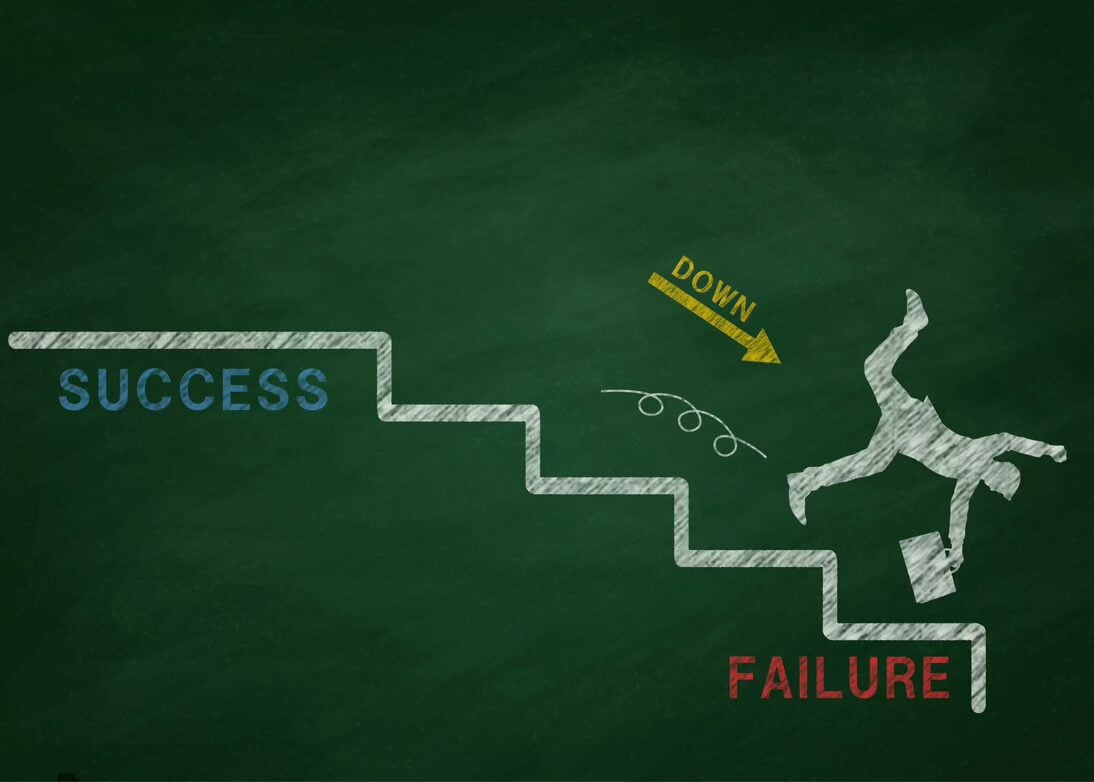
Let he who girds on his armor [before a battle] not boast like he who takes it off [afterwards].
— I Kings 20:11
During a game against the Nov. 15 New England Patriots, NFL’s Detroit Lions superstar defensive player Adin Hutchinson collapsed on the field, and limped off with a knee injury that proved to be season-ending.
Hutchinson did not incur the torn ACL by being blocked or tackled. He did it to himself by celebrating.
Celebrating?
Hutchinson, a well-paid, All-Pro defensive end in the prime of his career, collapsed after sacking the Patriots’ quarterback Drake Maye, leaping in the air, then landing awkwardly on the turf and causing his knee to buckle.
Season over!
The injury, which required surgery, was just the latest example of self-harm via premature or excessive celebration over an individual or team accomplishment.
Name the sport: NFL, NBA, MLB, pro soccer, high school football — they’ve all taken to ban, penalize or discourage high-visibility celebratory behavior that often borders on “taunting” opponents. Immature. Insulting.
And, as in the case of Hutchinson, they’re also plain dumb. They can derail or shorten a career.
You jump in the air because you knocked someone to the ground? Outside of a football field, you might be arrested for such an action.
You might also incur the scorn of sensible, less-competitive — possibly less-talented — players. Not every puck shot into the net or baseball hit over the fence requires a high-fivin’, back-flippin’, jive-dancin’ expression of temporal “victory.”
How many people exult in this way if they ace a geometry test or close on an important deal?
It’s only a game.
Anyway, isn’t quiet confidence or the recognition of one’s peers sufficient?
New York Giants running back Cam Skattebo, scared by Hutchinson’s self-inflicted injury, announced last week that he is retiring his signature backflip celebration.
He told the New York Post. “I’m not doing that. That ain’t going to happen to me.”
The Torah frowns on exaggerated expressions of victory. It offers examples of people who celebrated too soon — and paid the price.
• Pharaoh thought his troops had it cinched when the Israelites were trapped at the Red Sea — but they up drowned.
• Philistines defeated the forces of Israel at Shiloh, captured the Ark of the Covenant — then suffered a humiliating defeat.
• King Saul disregarded the Divine command to defeat Amalek and “everything he has,” then spared “the best” of the animals — and lost the kingship.
• Haman, a serial premature celebrator, assuming his closeness to the king guaranteed his continual success.
If it’s folly to celebrate too soon, the converse is: Don’t give up. Don’t concede. Don’t assume all is lost no matter how far you or your team is behind early in the contest. The Torah offers examples of this, too.
• The Israelites who were trapped against the Red Sea, ready to return to slavery in Egypt;
• The Israelites who heard the12 spies negative report about the Promised Land, and again yearned to go back to Egypt.
Do we too early take victory — or defeat — for granted?
Consider world history:
• Napoleon, having conquered much of continental Europe, expected a decisive victory in Russia; the Russian army and winter said nyet.
• President George W. Bush deposed Saddam Hussein in Iraq, then famously declared “mission accomplished!” — 11 long years and 4,500 soldiers’ deaths before the US withdrew from Iraq.
Return to sports:
• Lindsey Jacobellis, leading her snowboard cross race in the 2006 Winter Olympics, did a showy jump near the finish line, lost her balance, fell and settled for the silver medal;
• Adriana Pirtea, led the women’s competition in the 2007 Chicago Marathon, started celebrating, slowed her pace — and was passed by the eventual winner;
• Gus Ferotte, Washington Redskins QB, head-butted the end zone wall after scoring a touchdown —and suffered a sprained neck;
• Adil Osmanov, a judoka, executed a forceful move to mark his bronze medal at the 2024 summer Olympics — and dislocated his shoulder; and . . .
The list goes on.
Celebrate too soon? I learned to see the folly at the start of my journalism career.
As a budding sports writer at my alma mater a half-century ago, I sat in the stands at one of my college baseball team’s games. Early in the game, one of the players hit a home run that put my team way ahead. The players whooped and yelled and exchanged fist bumps. As if the game were over.
Sitting next to me was the school’s retired baseball coach and athletic director. He frowned. It’s too early to claim victory, he declared. He was right — the home team went on to lose the game.
Lesson learned!
Presumptive acts of hubris can lead to sometimes-inevitable consequences bordering on punishment.
College and pro athletes should know better. Celebrate after — only after! — the final gun sounds, after the results of a competition are official.
As a sometimes-sports-writer and always-fan of my hometown’s collegiate and professional teams, I never took a victory for granted, no matter how lopsided a score was in the early innings, periods, quarters, etc. Watching players or fans celebrating made me uncomfortable.
It’s not realistic. It’s discourteous.
And it may be an invitation to a torn ACL.