

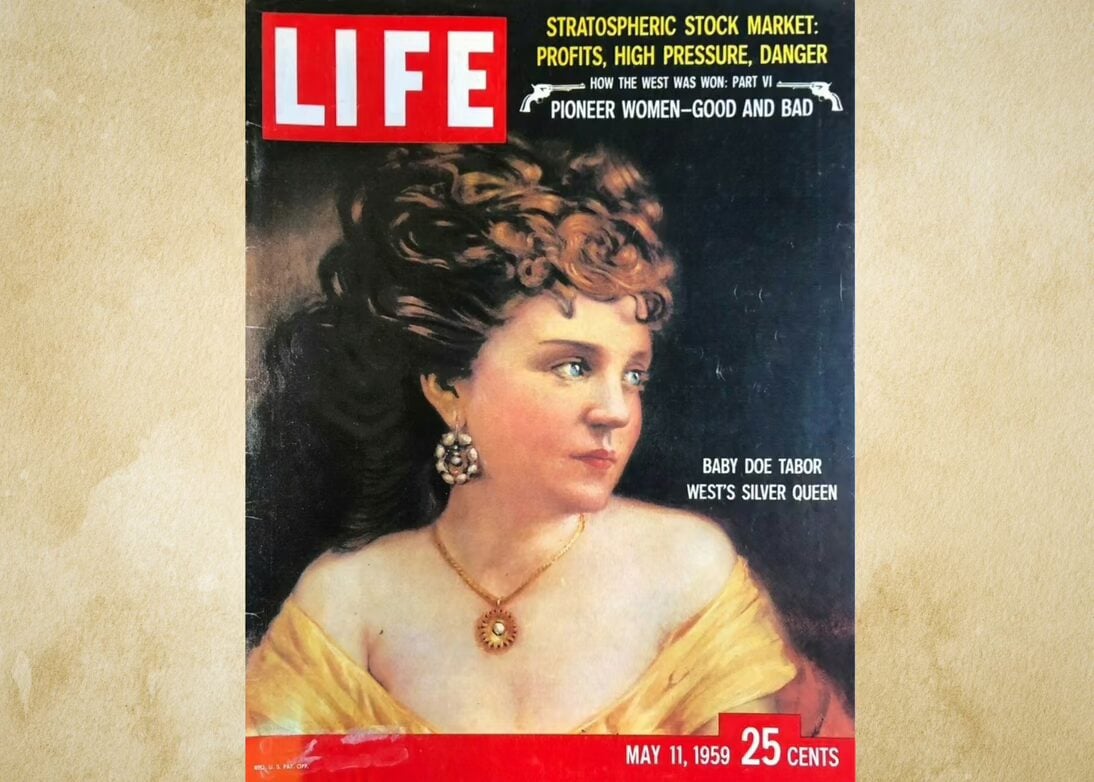
Apparently, I’m what’s called a “Doehead.” I’d never heard the term before last month. It refers to people who are very into Colorado’s HAW Tabor, Augusta and Baby Doe saga. I learned this in the pre-opera notes for “The Ballad of Baby Doe,” which was staged this season by the Central City Opera.
Considering I was wearing a Victorian-style pink duster holding a 1959 copy of Life that featured the mining town beauty on the cover, I really wasn’t in a position to dispute the moniker. Oh, who am I kidding? I took to it like a hot knife through butter.
Despite not knowing a single note of the opera, I knew I would love it.
I was seeing it where it debuted, staged by the opera that had commissioned it, in a building that Baby Doe herself had probably frequented. Could it get any better? Actually, it could. Maybe one day I’ll see it at the Tabor Opera in Leadville, the scene of the crime. That’s not pie in the sky; it’s happened twice before (again, per pre-opera notes).
There was no way better for me to mark America 250 and Colorado 150. The Tabors’ story is quintessentially American, uniquely Coloradan. Rags to riches to rags. Traveling west for opportunity. Taking risks — both smart and stupid. A storyline that speaks in particular to Jewish pioneers — opening a mercantile after failing to strike gold.
Doeheads exist because the Tabors’ is the kind of story that enthralls. I’ve been obsessed with it since the late 1980s, when we picked up two booklets by Caroline Bancroft on Baby Doe and Augusta on a family day trip to — as fortune would have it — Central City.
I’m not a gambler and hadn’t been to Central City since then, and I probably won’t again, until next summer that is. The Central City Opera is now on the list.
Related Posts
© IJN 2026


