
ROSH HASHANAH 5787
SECTION B, PAGE 11
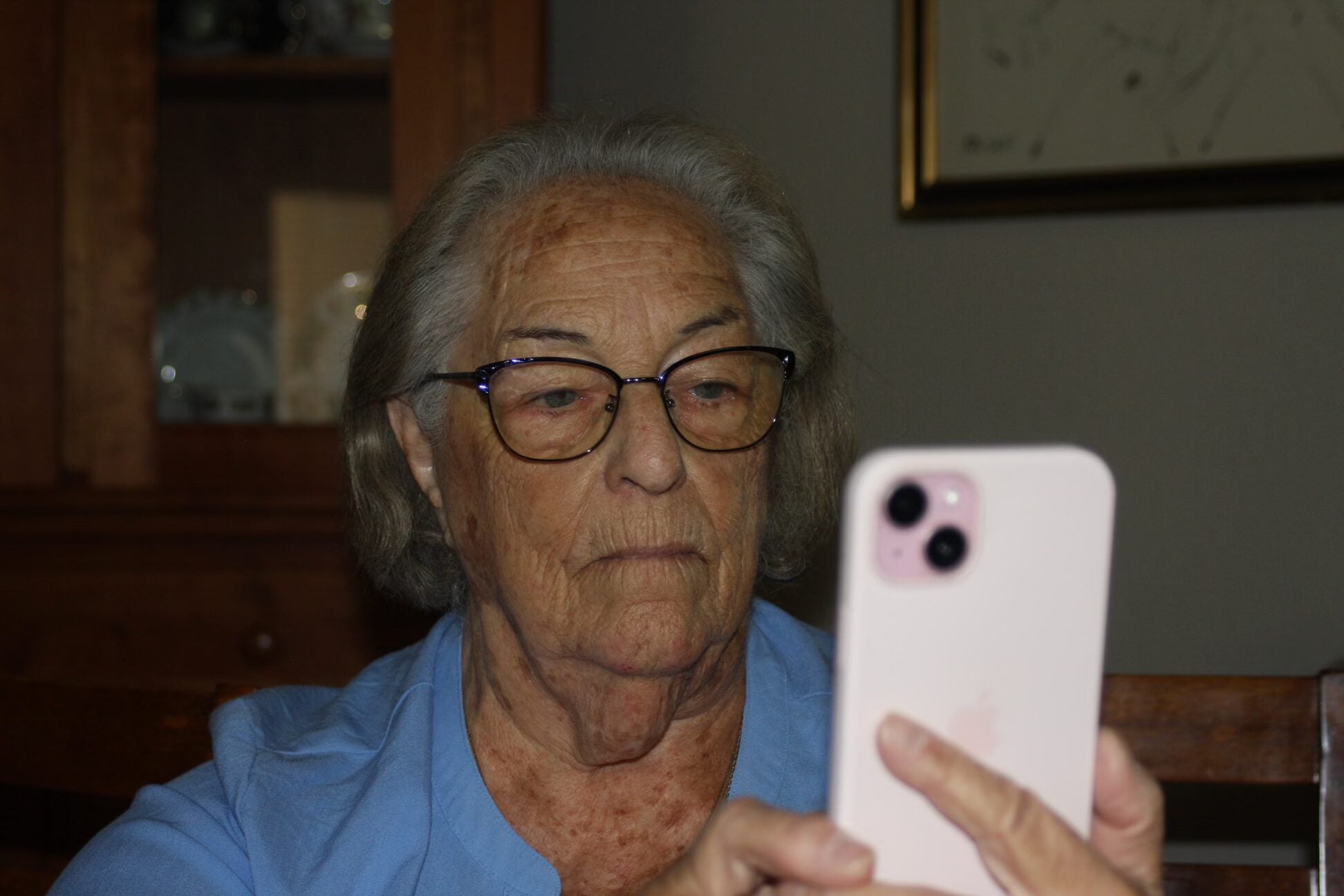
In the middle of the afternoon on May 14, Leslie Tunick Frisbee of Boulder saw a text pop up on her iPhone.
“It started with a notice from Apple that there was a charge to my account from an Apple store in Canada, for over $400 or so.
“It read, ‘If this was not you, please notify us.’”
Frisbee, 79, did what so many do; she called the phone number on the text to report that the charge was not hers. She had absolutely no inkling that the ensuing conversation would change her life.
“They said, ‘We have to notify your bank to stop the payment from your Visa account. What is your bank?’
“They did not know my bank, and that should have been a red light,” she now says.
“I told them the name of the bank and they replied, ‘We’ll connect you right now with the fraud line at FirstBank.’ They assigned a case number for me.”
At that moment, the scammers on the other end of the phone had an unwitting victim under control, with some methodical trickery in place to clear out her Charles Schwab account, worth $206,000.
Her advice: ‘Never, ever respond to an email or text from any account you are not sure of’
Frisbee has since filed a police report, but has been told that catching the culprits is unlikely.
“We have to guard you,” the scammer posing as a fraud specialist told Frisbee. “They have your social security number. They have your bank. They have everything about you.”
The fictitious fraud department member then told Frisbee that since she had been swindled at the Apple store in Canada, somehow she was now involved with an international money laundering scheme.
“You are guilty,” Frisbee heard the person on the other end of the phone call tell her.
She was advised not to talk with anyone else about the fake scam or about the phone call with the “fraud department,” that anyone else who knew of the matter “will be an accomplice and they can be arrested in the middle of the night at any moment.”
Frisbee was scared. Worse, she was totally alone. Except, of course, for the elaborate scammers, who told Frisbee that she was required to speak with the Federal Trade Commission (FTC).
“We see there have been leaks and we need to get you help immediately,” Frisbee was told.
The next call was from someone purporting to be Gordon Williams with the Federal Trade Commission.
“He was charming, friendly and wonderful, like my new best friend,” Frisbee says.
“He told me I needed to buy an iPhone 17 at an Apple store because he needed to get a phone number that would ensure privacy and that no one could trace the conversations.
For the better part of two weeks, more conversations took place over this new number. She even received a letter from what appeared to be the FTC. It was, of course, a fake.
The fraudulent Williams told Frisbee, “We will guard your money for you.”
Frisbee was advised to clear out her Charles Schwab account, worth $206,000, and transfer that to her bank account. They then told Frisbee the only way to protect that money was to turn it into gold, and to visit Erie Gold and Silver to liquidate those funds.
Once Frisbee exchanged her nest egg into gold, came the final stanza in this well-orchestrated fraud.
“Williams said, ‘I have an undercover agent who is going to meet you and pick up the gold from you.’
“The person I was to meet was someone named Jason. Williams gave me a code number. I was to meet Jason in the Safeway parking lot on 28th St. He told me, ‘We’ve got two guys from the crime ring arrested. Tonight we will be arresting the last person. Once we arrest him, we will be able to drop the charges against you.’”
The persuasion was enough for Frisbee to part with over $200,000 in gold.
“We met at the parking lot. A young guy was dressed in plain clothes came over to me. At the same time, ‘Williams’ was on the phone with me, saying, ‘Don’t get out of the car yet. Don’t get out of the car yet.’
“He wanted as little as possible being filmed by the cameras.”
Just like that, the gold was gone, for good. The driver did not have a front license plate, and the rear plate was out of view of security cameras; no doubt the bag man at the rendezvous point knew the limited parameters of the cameras in that strip center.
Once home, Frisbee called ‘Williams,’ only to find no answer. At that moment, Frisbee realized she had been deceived and robbed.
“I was in disbelief,” Frisbee says. “I’m thinking to myself, ‘No, this really didn’t happen. How did I fall for this?’ I had, and even now it is like ‘this is not real.’”
It was real, indeed. All of her money was gone.
Frisbee is not alone. The FBI reported that in 2025 there were 201,266 complaints of phone scams against people over the age of 60. That’s 37% more than in 2024.
Now part of a growing statistic, Frisbee has simple advice:
“Do not respond to emails and texts from people. Do not respond to someone you don’t know.
“Never, ever respond to an email or text from any account you are not sure of.
“And if you get a text from Apple, or from Amazon, verifying a purchase, do not ever, ever respond.”
Frisbee lived off of the interest from her life savings — the $206,000 that became a gold mine (literally) for the phone scammers. With little cash to her name, Frisbee fears she will have to move out of her modest Boulder apartment.
For now, she has received some help from Jewish Family Service and her brother in Georgia has set up a GoFundMe with hopes of generating funds to live on.
“What’s really hitting me,” Frisbee says, “is that I’m hitting my real senior years without any security.
“It’s very, very scary.”
AARP Fraud Hotline: 877-908-3360
© IJN 2026


