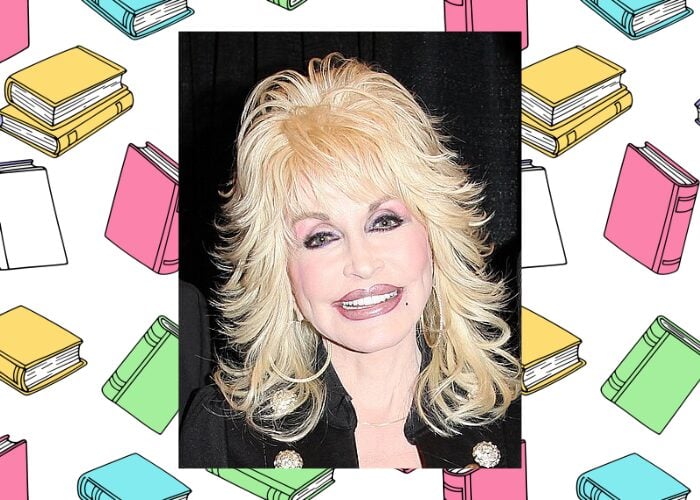
That number summarizes the main accomplishment of Dolly Parton, the beloved country singer who died last month as an enormously wealthy woman.
The figure is not her estimated lifetime earnings, or the value of her estate at the time of her death.
It is the number of books distributed for free, to children in the US and in four foreign countries, as of this month, by the early-childhood literacy intervention program she founded 31 years ago.
Imagination Library, which she established under the auspices of her Dollywood Foundation to meet the literacy needs of underserved youngsters in the Great Smoky Mountains and then expanded, was an expression of respect for Parton’s father, Robert Lee Parton, a tobacco sharecropper.
He had never learned to read or write while growing up poor in rural Tennessee, and regretted that lack his entire life.
Parton established Imagination Library as a non-sectarian, nonprofit enterprise, sending out books — children are signed up for the program at birth — about such age-appropriate subjects as animals, nursery rhymes, self-esteem, courage and character building.
Leveraging her wealth and her celebrity status, via 2,800 local partners in the communities where recipient children lived, Parton provided the kids with books and an emotional attachment to them.
To the tens of millions of children who have received Parton’s books every month, she was known as “The Book Lady.”
In an era of declining book sales and readership — because a growing number of people, especially young ones, do most of their reading on electronic devices — Parton’s effort taught children around the world the tactile beauty of owning and reading physical, page-turning books.
The Imagination Library motto: “Dream More, Learn More, Care More, Be More.”
Parton wanted to teach kids — originally in the region where she grew up — the value of education and reading.
It’s an extremely Jewish concept.
For many Jewish children, their introduction to Jewish education at ages three-to-five begins with the teacher putting a drop of honey on a slate or on the letters of the Hebrew alphabet to make learning sweet. Is a rebbe likely to put a dollop of dvash on an iPad screen?
The success of Imagination Library inspired a Jewish version — PJ Library. Its founder, Harold Grinspoon, credited Parton for his program’s impetus. Its name is a sign that parents are encouraged to read the books at bedtime to their children, who are dressed in their pajamas (PJs.)
Media reports after Parton’s death described her at the top of the pantheon of very well-off celebrities — particularly entertainers and athletes — who were flesh-and-blood examples of Maimonides’ highest of eight levels of charity: a gift that enables someone to avoid becoming dependent on others . . . a job, a loan, a partnership. In other words, giving the person the capability of becoming self-sufficient.
The pantheon of philanthropic celebrities leveraged their financial success into enterprises that improved the lives of millions of people. Like Parton, this group of social entrepreneurs established programs or institutions — medical, educational — that taught people the skills to educate themselves and other, and to perform life-saving procedures.
Members of this elite group of men and women include:
• Dikembe Mutombo
The former Denver Nugget and NBA Hall-of-Fame basketball player, born in the Democratic Republic of the Congo, dreamt of becoming a doctor. But he became a professional athlete so he could earn more money, which he used to establish a 300-bed hospital, named for his mother, in his homeland.
“I’m now treating more people than any doctor could have in his lifetime,” Mutombo said.
• Danny Thomas
The Lebanese-American actor founded the St. Jude Research Hospital in Memphis, Tenn., honoring a promise he made in a Detroit Catholic church. As a struggling young actor, he had prayed to St. Jude Thaddeus, patron saint of hopeless causes. When a star, he raised funds for the “shrine” medical center from members of his Arab community.
• Julius Rosenwald
The major owner of Sears, Roebuck and Co. partnered with schools, governments and private donors in 15 states in the South to establish 4,977 schools for more than 663,000 black students unable to receive a decent education at segregated institutions.
Members of the local communities also provided labor for the schools’ construction.
Parton personified this type of prominent person — her influence outlives her, on a massive scale. A self-described “woman in business” — in addition to being a singer and songwriter and actress and author and founder of the Dollywood amusement park — she earned an estimated $450 million during her 80 years, through her musical hits, ownership of her music rights, entertainment performances, licensing arrangements and profits from her amusement park in Pigeon Forge, Tenn.
She invested wisely and spent wisely . . . and for Parton, who grew up in poverty, the riches she accumulated as an adult were not an end in themselves.
The story is told of someone — a king, according to one version of the story — who asked Sir Moses Montefiore, the British financier and banker, one of the 19th century’s most affluent individuals and a generous supporter of Jewish causes around the world, how much he was worth.
Montefiore cited a figure that seemed far short of his personal wealth.
The person who asked Montefiore the question was puzzled.
“Surely, you are worth much more than that,” he said.
“You didn’t ask me how much I own,” Montefiore responded. “You asked me how much I am worth.”
The figure he had cited was his calculation of how much money he had given to charity.
Which brings to mind another number that was important in Parton’s life: $500-$600 million.
That is how much money, according to Forbes magazine, that Parton gave to charity during her life.