By Joseph Strauss
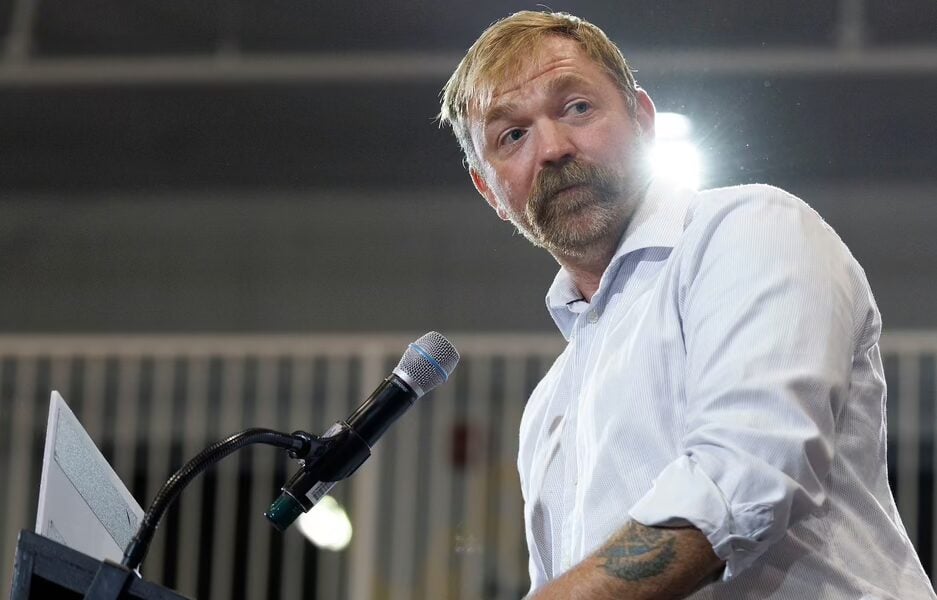
Graham Platner, the anti-Israel progressive with a covered-over Nazi tattoo who took Maine’s political establishment by storm, is under intense pressure to suspend his campaign for US Senate amid allegations of sexual assault.
The allegations reported by Politico on July 6 were the latest in a series of controversies that have mired Platner’s campaign, including his tattoo, unearthed Reddit posts and other reports about his behavior toward women.
He had had the Nazi tattoo for 18 years when New York Mayor Zohran Mamdani and Vermont Sen. Bernie Sanders endorsed Platner, but now they have joined calls for him to step aside.
The most recent allegations upped the scrutiny on Platner — who was accused of rape by a former girlfriend who said he entered her home uninvited about five years ago and assaulted her.
The Maine Democratic Party leadership called on Platner on July 6 to withdraw as the Democratic nominee, saying that the party needed to “refocus this campaign” on the fight against GOP Sen. Susan Collins.
The seat is key to Democratic efforts to retake the Senate. Only if Platner drops out now can the party still put another name on the ballot by July 27.
Senate Minority Leader Chuck Schumer — who initially backed Platner’s opponent before she dropped out, but then embraced Platner after she dropped out — said in a joint statement with New York Sen. Kirsten Gillibrand that the Democratic Senatorial Campaign Committee “will not invest in the Maine Senate race if Platner remains on the ballot.”
Platner told Politico that any “accusation of non-consensual behavior is categorically untrue.” He said in a video posted to social media on July 6 that he is “taking the time to reflect on the best path forward.”
In June, Platner easily won the Democratic primary after his top opponent, Maine’s 78-year-old governor Janet Mills, suspended her own campaign.
Mills had been backed by Senate Minority Leader Chuck Schumer as well as the Jewish Democratic Council of America, but was trailing badly in the polls.
A number of Democratic leaders subsequently threw their support behind Platner in his campaign to unseat GOP Sen. Susan Collins.
Platner’s rhetoric around Collins’ endorsement by the campaign arm of the American Israel Public Affairs Committee — Platner said she was “bought and paid for by Benjamin Netanyahu” — drew allegations of anti-Semitism from a range of groups.
At a JDCA event held shortly after Mills dropped out, attendees were divided over whether to put aside their differences and back Platner.
The JDCA itself did not give Platner its support, and said in a statement on July 6 that it “never supported Graham Platner because he doesn’t share the values of our community.”
“The allegations of sexual assault make clear he should have no place in this race,” the JDCA wrote.
“We hope to support a Democratic candidate who reflects the priorities — and morals — of Jewish Americans, and will beat Susan Collins in November.”
At the JDCA event in May, the group’s CEO, Halie Soifer, also pointed to Platner’s tattoo as a cause for concern.
“As far as I’m concerned, you can regret having a Nazi tattoo, you can try to cover it up, but it’s still there,” Soifer said at the time. “And to me that symbolizes reasons for deep concern about his views and values.”
Platner has denied having any knowledge that his tattoo, which he’s since covered up with another design, was a Totenkopf, a death’s-head symbol used by the SS branch that guarded concentration camps.
A number of the progressive groups and officials that had coalesced around Platner withdrew their support and called on him to step down following the July 6 report, including California Rep. Ro Khanna and Arizona Sen. Ruben Gallego.
Khanna, who previously praised Platner for being willing to “call what happened in Gaza a genocide,” withdrew his backing late July 6.
“I’ve been very clear that sexual assault or violence against women is a red line,” he tweeted.
“These allegations are very serious and credible. Graham Platner should drop out from the race. I am withdrawing my endorsement.”
Track AIPAC, which aims “to end AIPAC and the Israel lobby’s stranglehold on American Democracy,” also said it could no longer back Platner.
“The allegations against Maine Senate candidate Graham Platner make it impossible for Track AIPAC to continue our support,” the group tweeted on July 6.
“We are revoking our endorsement immediately and urge Platner to resign from the race.”
New York State Sen. Julia Salazar, who is a Democratic Socialists of America member, wrote that “having a Nazi tattoo doesn’t pass the sniff test for running for US Senate, nor did his excuses. And far worse that he faces a credible allegation of rape.”
End Citizens United, a campaign finance reform organization, rescinded its endorsement and called the allegations against Platner “profoundly disturbing and disqualifying.”
Michigan Rep. Haley Stevens — an AIPAC-backed Democrat running for US Senate — called on Platner to “step aside,” and used the opportunity to take a jab at her own anti-Israel opponent, Abdul El-Sayed. Stevens criticized El-Sayed for his statement, which did not name Platner and said that voters should not be forced to “make a moral compromise between sexual violence or corporate servitude.”
Another pro-Israel Democrat, New York Rep. Ritchie Torres, called for Platner to drop out of the race, adding, “I have no endorsement to rescind.”
The party has a July 27 deadline to decide whose name to put on the ballot if Platner drops out. One candidate whose name has emerged as an option is Troy Jackson, who finished third in Maine’s gubernatorial primary in June with the backing of the Democratic Socialists of America and endorsements from Ro Khanna and Bernie Sanders.
Nirav Shah, an epidemiologist and healthcare executive who outperformed Jackson in the same election is reportedly interested in the job as well.
Shah said in a tweet on July 6 that he would not vote to send aid to Israel, and that he considers Israel guilty of committing a genocide.
Another name being floated is Shenna Bellows, Maine’s secretary of state who is also the former executive director of the Holocaust and Human Rights Center of Maine.
Bellows has not commented extensively on Israel, though she signed Mills’ 2023 proclamation recognizing the 75th anniversary of the State of Israel that wished the country “a peaceful and prosperous future.”