

The Trump administration’s talks with Iran will be the first negotiations between the US and Iran in a decade, and will aim to replace the Obama-era nuclear agreement that both President Trump and PM Netanyahu and Trump both reviled.
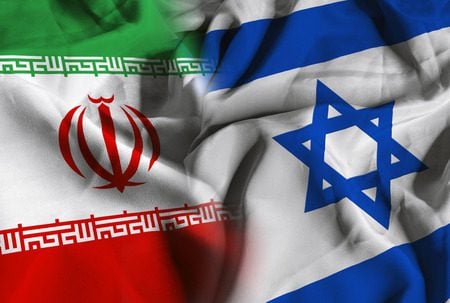
Trump threatened to bomb Iran if it did not come to the table, a threat that apparently focused its attention.
Why are the US and Iran negotiating?
As Iran, under an oppressive and aggressive theocracy, has pursued a nuclear weapons, the US has leveled sanctions on the country — sometimes serious, sometimes not. Israel has fought a shadow war against Iran — assassinating nuclear scientists, infecting Iranian systems with an advanced virus and employing other forms of subterfuge.
Iran has enriched uranium to high enough levels in order to build a bomb, and successive warnings have said that the country is “closer than ever” to being a nuclear state.
A nuclear-armed Iran would pose clear risks to Europe and to Israel, a close US ally that itself is assumed to have nuclear weapons.
Iran has repeatedly called for Israel’s destruction, and funds a network of terror groups that attack it. Last year, Iran and Israel fought their first-ever rounds of direct combat. Iran also funded attacks on US troops during the Iraq war.
Other neighbors of Iran, particularly Gulf states and Saudi Arabia, also fear the idea of their regional rival possessing the bomb.
What happened before?
President Barack Obama in 2015 negotiated a Iran nuclear agreement, negotiated alongside Russia, China and a some European countries, trading 10 years of inspections and curbs on Iran’s nuclear program for sanctions relief — and hundreds of millions in cash.
Obama considered this his signature diplomatic achievement.
Netanyahu said the deal left Iran’s nuclear program in place and “paves Iran’s path to the bomb.” His address to a joint session of the US Congress did not derail the deal.
In 2018, Trump withdrew from the deal and applied what he called “maximum pressure” in the form of tougher sanctions.
In response, Iran ramped up its nuclear production; a few years later, President Joe Biden’s effort to curb Iran’s pursuit of nuclear weapons failed.
If Trump hated the Iran deal, why is he negotiating a new one?
The president says he is the master dealmaker, and there’s perhaps no region where he enjoys negotiating more than the Middle East. In 2020, he brokered peace deals between Israel and four Arab countries.
Ahead of his inauguration this year, his team helped broker a ceasefire and hostage release deal between Israel and Hamas.
Steve Witkoff, Trump’s friend and chief envoy, who is Jewish, led Trump’s team in that negotiation. He will lead the US team in the Iran talks as well.
In 2020, the first Trump administration assassinated Iranian senior general Qasem Soleimani; the previous year, Trump had reportedly weighed a more extensive attack on the country before demurring.
Now, he’s sent a letter to Iran’s supreme leader, and is extending an invitation to talk — while still threatening military action if Iran doesn’t get serious about a deal.
“Hopefully we can have a peace deal,” Trump said a month ago. “I’m not speaking out of strength or weakness. I’m just saying I’d rather see a peace deal than the other. But the other will solve the problem.”
What has changed?
For one, Iran is weaker: Israel has decimated its allies Hamas and Hezbollah, and decimated its air defenses.
Syria is no longer led by Iranian ally Bashar Assad and no longer available to allow the delivery of Iranian weapons to Hezbollah.
Russia, another Iranian ally, is bogged down in Ukraine.
US strikes have aimed at the Houthis, an Iranian ally in Yemen.
Trump’s advisers appear to be saying that this round of negotiations will aim to go farther than the Obama deal. Trump not only wants to monitor and limit the Iranian program, he wants to dismantle it.
In exchange, Trump could offer sanctions relief. Iran has floated the possibility of inviting US investment.
“Iran has to give up its program in a way that the entire world can see,” Mike Waltz, the national security adviser, told CBS in March.
Trump also hopes to stem Iran’s ballistic missile program and its support for regional terror groups. So while the talks aren’t directly about the Gaza war, they could affect it. It’s possible that, in the wake of Oct. 7, 2023, Iran will be compelled, as part of a deal, to withhold its support for what it call its “Axis of Resistance” before Israel’s destruction of Hezbollah and much of Hamas.
How do Netanyahu and Israel feel about the talks?
Netanyahu has been globetrotting to speak out against the dangers the Iranian regime poses. He’s brought a picture of a cartoon bomb to the UN to illustrate the point. Year after year. He proclaimed that the biggest threats facing Israel were “Iran, Iran and Iran.”
The vast majority of Jewish Israelis opposed Obama’s Iran deal. Criticism of Netanyahu’s Iran policy, within Israel, focuses largely on his tactics, which his critics said were overly antagonistic toward Obama. There is no pro-Iran caucus in Israel’s political mainstream.
As opposed to 2015, Netanyahu now wears a happy face. Trump is a close ally, personally and ideologically, and Netanyahu does not criticism Trump in public as he did Biden and Obama.
Sitting alongside Trump, Netanyahu refrained from criticizing the impending talks — and tried to shape their parameters. He said the only good deal would be one that mimics Libya’s surrender, in 2003, of its nuclear arsenal.
“We’re both united in the goal that Iran does not ever get nuclear weapons,” Netanyahu said. “If it can be done diplomatically in the full way, the way it was done in Libya, I think that would be a good thing, but whatever happens we have to make sure that Iran does not have nuclear weapons.”
What is Iran saying?
It’s insisting that it does not want nuclear weapons — its president said Iran is “not after” them.
“His excellency has no opposition to investment by American investors in Iran,” President Masoud Pezeshkian said in a speech in Tehran, referring to the supreme leader. “American investors: Come and invest.”
Iran said earlier this week that the talks would be indirect, contradicting Trump.
Iran is also taking a threatening tone of its own. Foreign Minister Seyed Abbas Araghchi also referenced the possibility of violence.
“Mark my words: Iran prefers diplomacy, but it knows how to defend itself,” he wrote on X.
What happens if the talks fail?
Before Trump’s announcement, some Israelis were pushing for a strike on Iran, arguing that the time was ripe. Now, both Netanyahu and Trump are saying that could happen if the talks fail — and that Israel would take the lead.
“If the talks aren’t successful with Iran, I think Iran’s going to be in great danger . . . because they can’t have a nuclear weapon,” Trump said during his White House press conference with Netanyahu. He added that if the talks fail, “It’ll be a very bad day for Iran.”
Netanyahu said on April 8, saying that if Iran “drags out” the talks, “then there is the military option. Everyone understands this. We spoke about this at length.”
Trump reiterated the stakes on April 9 — adding that Israel would play a central role in any military action.
“They can’t have a nuclear weapon,” Trump told reporters about Iran, Reuters reported. “If it requires military, we’re going to have military. Israel will, obviously, be . . . the leader of that. No one leads us. We do what we want.”


