

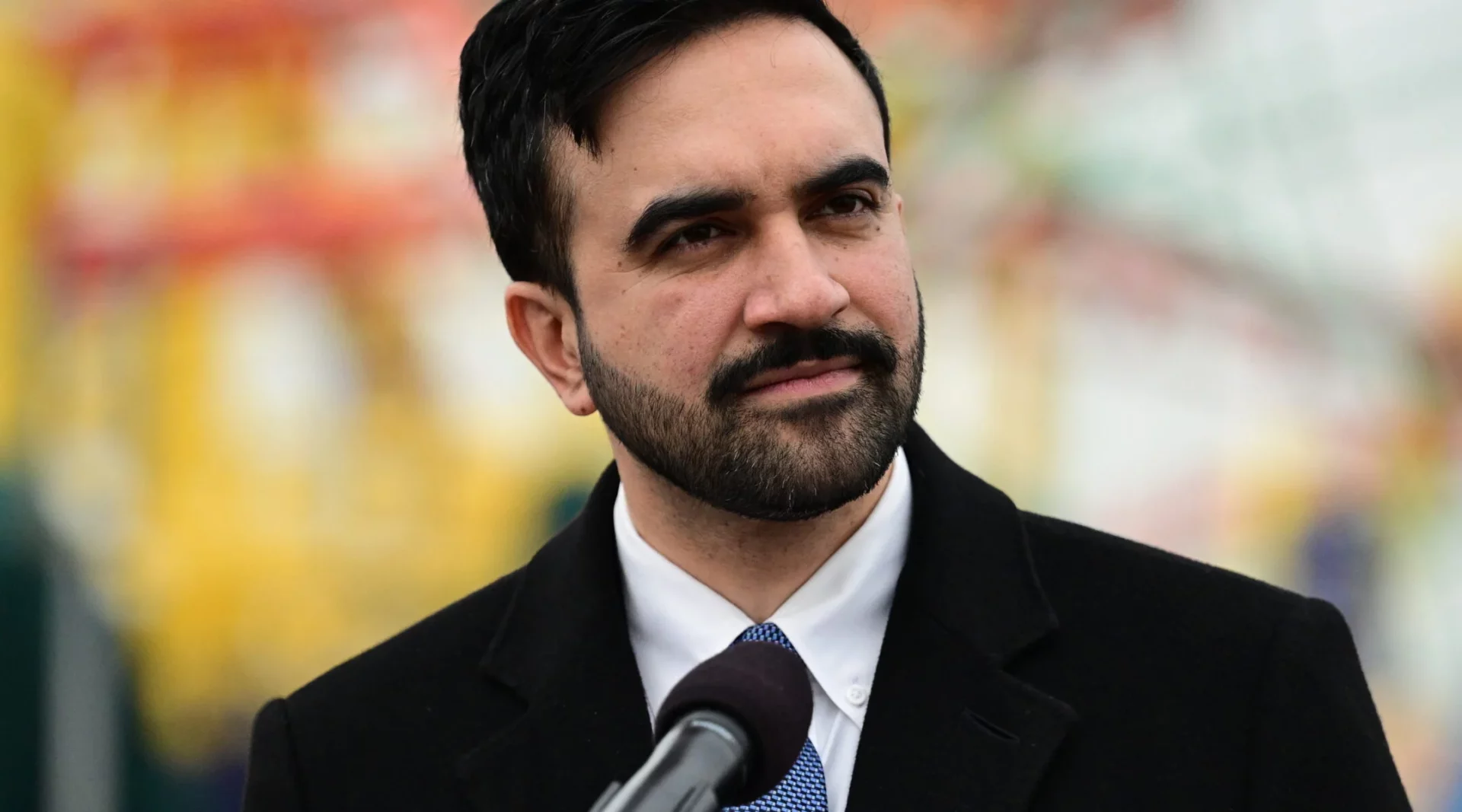
Zohran Mamdani, the New York City mayor, vetoed a bill that would have created “security perimeters” around educational institutions that prevent “physical obstruction, physical injury, intimidation and interference” while “preserving and protecting the rights to free speech, assembly and protest.”
The bill passed the New York City Council 30 to 19 and was thus subject to mayoral veto.
Another bill that creates a buffer zone around houses of worship passed the council with a veto-proof majority of 44 out of 51 members.
The mayor’s spokeswoman has said that synagogues violate international law when they host pro-Israel events.
The mayor said he disagreed with the worhsip-buffer bill’s framing of all protest as a security concern.
The bill requires the New York City Police Dept. commissioner to “establish a plan to address and contain the risk of physical obstruction, physical injury, intimidation and interference at places of religious worship while preserving and protecting the rights to free speech, assembly and protest.”
The bill requires the NYPD commissioner to file a proposed and a final plan to the mayor and the council speaker within 45 and 90 days respectively after the bill goes into effect and directs the NYPD to post the final plan online.
Though the text of the two bills is near identical, Mamdani stated called the school-buffer bill “meaningfully different.”
The bill could apply to workers protesting federal immigration officers or “college students demanding their school divest from fossil fuels or demonstrating in support of Palestinian rights,” the mayor said.
“It is a piece of legislation that has alarmed much of the labor movement, reproductive rights groups and immigration advocates, among others, across this city.”
“Nearly a dozen unions have raised the alarm about its impact on their ability to organize,” he said. “That is why I am vetoing this legislation.”
The bill stated:
“Nothing in this section shall be construed or interpreted to infringe upon rights granted under the national labor relations act or the labor law,” states the bill, which Mamdani vetoed.
Julie Menin, the first Jewish speaker of the New York City Council, who has been outspoken about anti-Semitism, stated that “ensuring students can enter and exit their schools without fear of harassment or intimidation should not be controversial.”
Daniel S. Mariaschin, CEO of B’nai B’rith International, said that “it is an outrage that a request to protect Jewish schoolchildren — in the city of New York, of all places — would receive a cold shoulder from the mayor and his inner circle.”
“The mayor is taking his animus toward Israel and its supporters to a new low in now rejecting measures to ensure the safety of our young people,” Mariaschin said.
Sam Markstein, national political director and spokesman at the Republican Jewish Coalition, said “that Mayor Mamdani’s first veto as mayor of the city of New York serves to accommodate vile anti-Semitic protests comes as no surprise.”
Major Jewish groups said in an rare joint statement that they were “deeply disappointed” by Mamdani’s decision, which they called a “profound failure of City Hall to demonstrate to all New Yorkers that our safety is a priority.”
Eric Dinowitz, a member of the New York City Council and co-chair of its bipartisan task force on Jew-hatred, stated that “students deserve safety as they enter and exit their school buildings, and New Yorkers deserve transparency from the NYPD.”
“The legislation requires the NYPD, which is wholly under the power of the mayor, to plan for addressing interference, intimidation and harassment.
“The untrue claim that this bill infringes on free speech or is constitutionally unsound is not supported by the text,” Dinowitz said


