

By Tova Lazaroff
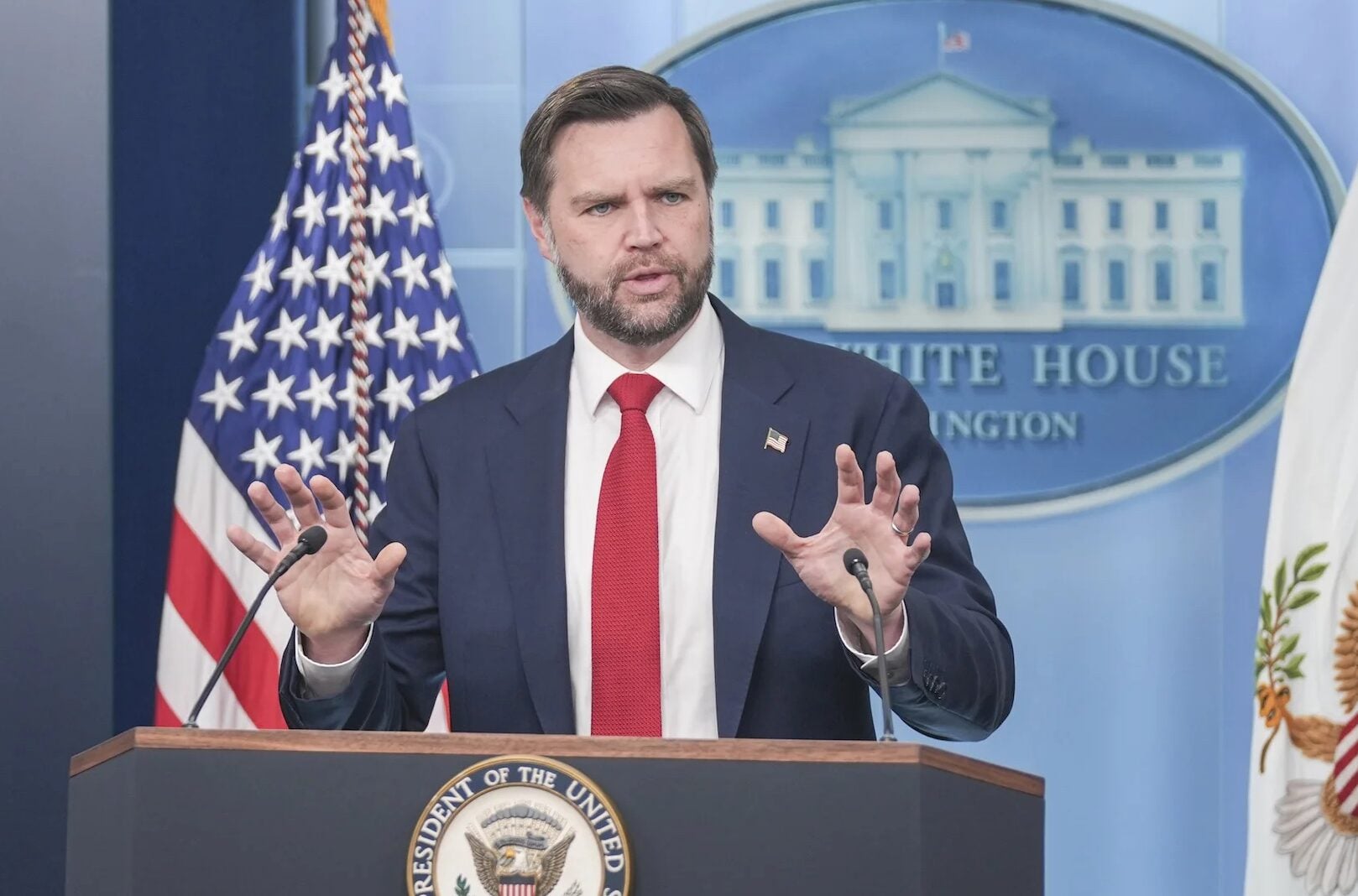
Israeli critics of the Iran deal should be wary of alienating President Donald Trump, particularly given their country’s dependency on US military aid, Vice President JD Vance told reporters on June 18.
“Donald J. Trump is the only head of state in the entire world who is sympathetic to the nation of Israel at this moment in time,” Vance said.
“If I was in the Cabinet of the Israeli government, I might not be attacking the only powerful ally that I have anywhere left in the entire world.”
Vance’s words heightened the growing rift between the two staunch allies over the war with Iran they jointly launched on Feb. 28, with the US fearing that a protracted campaign would lead to a worse outcome for the Republican party’s chances in the mid-term elections and Israel certain that a premature end to the war posed an existential threat.
The vice president spoke the morning after Trump signed a paper copy of the 14-point Memorandum of Understanding with Iran at the Palace of Versailles in France, following his signing of a digital version the previous Sunday, June 14.
Vance said, “The problem for Israel is not Donald J. Trump. And anybody in Israel who thinks their biggest problem is the president of the United States needs to wake up and smell the reality of the situation that country is in.”
The deal halts hostilities between Iran and the US and promises to end Iran’s blockade of the Straits of Hormuz, extending by 60 days the shaky ceasefire that has been in place since April 8 to allow for negotiations on a permanent agreement.
It is based on a carrot-and-stick approach in which Iran would receive billions of dollars at the end of the process if Tehran pledged to never procure or produce nuclear weapons.
Critics have called the deal “all carrot, no stick.”
The memorandum is short on details about Iran’s cessation of its nuclear program and provides for immediate economic relief for the Islamic Republic through the lifting of waivers on the sale of oil and the lifting of sanctions against Iran.
The deal also demands an end to Israel’s war against Hezbollah, an Iranian proxy, but not against Hezbollah’s war against Israel.
Israel fears the terms of the deal only empower the Islamic Republic, shoring it up from collapse and providing it with funds to develop nuclear weapons and provide military support to its proxy groups, while at the same time preventing Israel from defending itself against Hezbollah.
Trump’s comments on June 17 that Iran would be able to retain “some” ballistic missiles further added to Israeli unease.
Vance defended Trump’s stance on ballistic missiles, saying that the country’s stockpile and its launchers had been heavily depleted during the war and adding that Iran had a right to conventional weapons.
“You can’t tell a country, whether Israel or Iran, they’re not allowed to have any self-defense,” he explained.
“But we do expect that as part of the final deal, they are not gonna be able to build the kind of missiles that can broadly threaten the entire world,” Vance said, as he said that Iran would only receive financial and other benefits under the deal if it agreed to its terms, including halting its pursuit of nuclear weapons.
In an interview with The New York Times published on June 18, Vance said he found the “weird panic” and “freak out” in Israel “strange.”
Prime Minister Benjamin Netanyahu has refrained from directly attacking the deal, focusing instead on statements pledging that Israel retains its right to self-defense.
But far-right members of his coalition, such as Finance Minister Bezalel Smotrich and National Security Minister Itamar Ben-Gvir, as well as their political opponents, the opposition leaders in Israel, have warned of its dangers.
“Bibi, to his credit, has not gone down that path,” Vance told reporters in the White House. He underscored Israeli dependency on American military aid in a direct message rebuking the ministers.
“Over the last three months, two-thirds of the defensive weapons that have protected your homeland have been built by American hands and paid for by American tax dollars,” he stated.
Though Trump has strongly pressured Israel to comply with the agreement to end hostilities, Israel has objected to the inclusion of Lebanon in the deal between the United States and Iran.
Trump told reporters in France that “we do need to straighten out the Lebanon thing,” adding that he intended to speak with Hezbollah as part of that effort.
Israeli Defense Minister Israel Katz, speaking before Trump’s remarks, insisted that his country would continue to defend its northern border from Hezbollah attacks and would retain a presence in Lebanon.
“If Iran attacks Israel due to events in Lebanon — we will strike it with full force and make the power gap between us abundantly clear,” Katz said.
Israel was not a party to Sunday’s agreement, which it fears will strengthen Iran and Hezbollah and provide funds for Tehran to rebuild its nuclear and ballistic missile program.
Katz noted that Israel has conveyed its position to the U.S. administration that it will keep troops in Lebanon, where low-level fighting continued on Monday.
“Prime Minister Benjamin Netanyahu clarified this to U.S. President Trump and other senior American officials, and I also made this clear yesterday to US Secretary of Defense Pete Hegseth,” Katz said.
Israel’s policy is to keep the IDF indefinitely in the security zones it has established in Lebanon, Syria and Gaza in order to protect communities along the Israeli border, Katz added.
Sunday’s memorandum is expected to extend the shaky ceasefire of April 8 between Iran and the US for 60 days, during which time the countries will negotiate a broader agreement addressing Iran’s nuclear program.
Trump told The New York Times on Sunday that he would renew military strikes on Iran if a nuclear agreement is not finalized.
Several European leaders welcomed the move. “This is a hugely significant moment. We have long called for de-escalation,” outgoing British Prime Minister Keir Starmer said, stressing that “it is vital that all parties seize this opportunity . . . to secure stability in the region.”
Macron told Trump that the deal was an “important step” toward peace.
The IJNcontributed to this story.


