


JERUSALEM — As Hamas terrorists streamed into Israel on Oct. 7, 2023, overrunning communities, killing 1,200 people and taking hundreds captive — many Israelis had one overarching question:
Where was the army? And how did it let this happen?
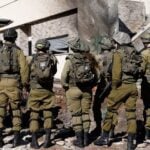
Now, nearly 17 months later, the Israel Defense Forces is providing a detailed response to that and several other questions about its conduct on Oct. 7 and before Oct. 7.
A report released Feb. 27 describes failure on multiple levels and many missed opportunities as the prelude to the bloodiest day in Israel’s history.
The report is a damning critique of what has long been Israel’s most trusted institution — the IDF.
One military official called Oct. 7 “a failure of historic proportions.”
The report is focused on the military’s conduct and does not delve into decisions made by Israeli Prime Minister Benjamin Netanyahu or other leaders.
Most of the Israeli public supports the formation of a state commission to investigate all levels of decision-making before and on Oct. 7, as has been done following other Israeli catastrophes. Netanyahu has resisted calling for one until “after the war,” which is undefined.
Ynet reports that the prime minister continues to block “the formation of a state commission of inquiry, that would necessarily probe the political echelon led by Netanyahu throughout nearly all the years of the ‘concept.’”
At the IDF, the chief of staff, head of southern command and intelligence chief have all resigned or announced that they would.
Here are some key points in Israeli coverage of the report: Hamas essentially conquered Israel’s southern border area because the IDF was outnumbered.
Why it took so long for the IDF to mount an adequate response — leaving families and communities on the border to fend for themselves for hours — comes down to numbers.
Hamas and other terror groups invaded with thousands fighters, but Israel had less than 1,000 soldiers in the area.
From the Times of Israel:
The attack began with over 5,000 terrorists, with just 767 IDF troops stationed on the border.
As a result of not realizing in real-time that the Gaza Division had fallen, the General Staff did not understand the severity of the attack and failed to put together an accurate picture of the operational situation.
This became a major challenge during the efforts to block the attack. For nearly 10 hours, the IDF’s Gaza Division, the regional division responsible for the border with the Strip, was defeated and overrun.
Israeli military intelligence dismissed years of warnings.
Israeli media refer prominently to the IDF’s mistaken “concept” of Hamas — namely, that it was not interested in war. There many signs that this was not the case, according to the military’s investigation, but they were brushed aside. Israel Hayom reported that the IDF mistakenly believed:
• Gaza was a secondary front for fighting.
• Hamas could be constrained.
• Hamas’ plan was unrealistic.
• IDF’s border security measures would protect Israel’s communities near Gaza.
Oct. 7 proved all of that wrong, the investigation found. Israel’s Channel 12 said:
The IDF’s research division did know that Hamas’ vision was to liberate Palestine and conquer Israel — but within the division the view was that Hamas and Sinwar were pragmatic, prepared to talk to Israel. Hamas was seen as an organization dedicated to accord and calm that tried to gain a foothold in the West Bank and was wary of war.
Israel employed the “Hannibal Protocol” on Oct. 7, endangering civilians’ and hostages’ lives.
Under the “Hannibal Protocol” used by Israel in fighting back on Oct. 7, the directive was to shoot anything moving in a drastic attempt to kill the enemy, but also endangers noncombatants.
The Air Force was carrying out “the Sword of Damocles” operation — a code name only revealed on Feb. 27 — to attack Hamas commanders and their headquarters around 10:30 a.m. on Oct. 7, 2023, just as it was carrying out the Hannibal Directive of gunning down anything that moved around the Israel-Gaza border. Now, the Air Force has been questioned whether the forces it had invested in attacking Hamas commanders deep in Gaza would have been better used to defend the Gaza border and to attack Hamas invaders in Israeli villages.


