

ROSH HASHANAH 5786
SECTION B, PAGE 10
In late 2009, Denver Academy of Torah parent Josh Fine looked at the five dormant acres of land adjacent to the school at 6825 E. Alameda Ave., and suggested the school use it as a community farm.
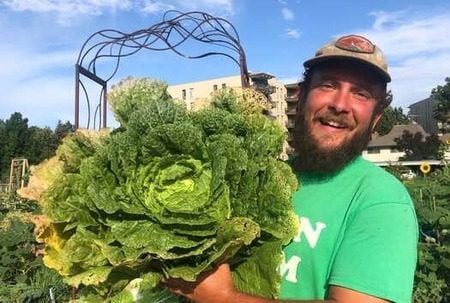
Around that same time, Amy Berkowitz Caplan, then a DAT staff member, attended a Hazon Food Conference, and came back inspired to start a farm at her workplace.
Those ideas sparked a firestorm of enthusiasm and community partnerships.
By April, 2010, Ekar Farm was launched, and by a year later, Ekar Farm had engaged more than 1,200 volunteers, partnered with over 55 organizations, established a 50-plot community garden, harvested 8,000 pounds of produce, donated 90% of the harvest to the JFS Weinberg Food Pantry, educated the community, collaborated with 10 youth education programs on service projects and built formal educational programs on topics from canning to composting.
That was just the beginning.
Over the ensuing 14 years, Ekar Farm grew to the point of donating 28,309 pounds of food in 2024 to those in need through a consortium of food banks, pantries and nutrition organizations.
That translates to 242,154 USDA servings of nutritious food.
Ekar and DAT mutually understood that DAT planned to build a high school building eventually, and last year, that time had come. Ekar would need to look for a new home.
Ekar Executive Director Jason Plotkin’s search for a new location led him to Marc Penner, CEO and president of Shalom Park, the Jewish community nursing home, perched on an expanse at S. Parker Road and Belleview Ave., in southeast Aurora. Shalom Park offered Ekar a 10-year lease on a 2.86-acre parcel on the northeast side of the nursing home and wellness center.
Previously, Ekar’s agreements with DAT were in 12-18-month increments.
“This is the longest-term agreement that Ekar has ever had in its 15-year-plus history,” Plotkin says.
“It gives us this longevity that we never had before, so we can fundraise in a different way. We can build buildings in a different way. We can invest in infrastructure in a different way.”
The arrangement is also a “win” for Shalom Park:
“Shalom Park is so proud to welcome Ekar Farm to our community,” says Penner.
“The meaningful opportunities for intergenerational programming, and collaboration among our elders, care partners, family members, volunteers and neighbors will be exciting and enjoyed by everyone involved.
“Shalom Park is counting the days until the first harvest!”
As of the current season, Ekar has ceased operations at DAT, and is temporarily working at Mountair Park in Jefferson County, where it is fulfilling all of its produce distribution agreements.
Even though there are hoops to jump through with the city of Aurora and and infrastructure improvements to be made, Plotkin is already mentally moving into the new space.
His vision includes planting annual production crops such as peppers, eggplant, tomatoes and garlic on the highest point of the property. He envisions a perennial garden on the slope, and on the western edge, an orchard. Think: apples, peaches, plums, and maybe nectarines and cherries.
The lot has already been plowed, and a new pergola has been constructed.
Plotkin expects a water line to be installed at the end of September.
“That triggers our ability to be here. You can’t do anything on a farm without water. So, once we get our water line in, we will be able to put in irrigation.”
In October, Plotkin plans to see the first garlic crop planted. “We will have food planted in the ground.”
Plotkin’s agricultural journey began at the age of 12 on historic Rosedale Farms in the small town of Simsbury, Conn.
Working summers harvesting corn, beans and peas, he gained hands-on experience with a range of farming practices — from viticulture and underground irrigation to aquaponics and aeroponics.
These formative years planted the seed for a lifelong passion for agriculture and community-centered food systems.
In 2010, Plotkin earned a BS in wildlife biology from the University of Vermont, where he deepened his understanding of ecology and environmental stewardship.
He went on to expand his skills in animal husbandry at Flying Pigs Farm in Sushan, NY, and later served as assistant manager at Sol Flower Farm in Ancramdale, NY.
In 2011, Plotkin founded Golden Acre Farm in Golden, Colorado, with a mission to grow food using holistic and sustainable methods while ensuring access for all — regardless of economic status.
Committed to fostering gratitude, community and hard work, he opened the farm to neighbors, volunteers and aspiring growers.
Plotkin joined Ekar Farm in 2012 as director of operations, playing a key role in establishing its foundation as a nonprofit focused on hunger relief and regenerative agriculture. In 2022, he became Ekar’s executive director.
Plotkin’s commitment aligns perfectly with seven pillars of Jewish values that guide Ekar:
• Kayamut — sustainabilty
• L’ohvdahul shomrah — land stewardship
• Kehilah — building community
• Adam v’adamah — interconnectedness with the earth
• Peah — sharing abundance
• Tzedek — food justice
• Shabbat and Shmita — honoring sacred cycles of work and rest.
“We love the principles behind Judaism that guide us into our work,” says Plotkin.
“Ekar Farm was founded by the Jewish community and it continues to be a Jewish organization.
“We have just now broadened our reach and our community to include lots of other people who aren’t Jewish,” says Plotkin.
Ekar’s staff includes a farm manager, a co-farm manager who also serves as community outreach and programs manager, a full-time fundraiser, support staff and two part-time community farmers.
There is a cadre of volunteers and community farmers who grow their own food on plots at Ekar.
The organization’s 2024 annual report indicates that 18,838 individuals were reached that year through volunteering and community programming.
Since he started as executive director three years ago, Plotkin has more than doubled Ekar Farm’s budget, going from under $300,000 to $600,000.
Even more money is needed to rebuild at Shalom Park, and fundraising will move into high gear.
Plotkin and his staff have their work cut out for them over the next year or so, but he is not complaining, rather just the opposite:
“Moving and rebuilding Ekar Farm from the Denver Academy of Torah to Shalom Park is both exhilarating and overwhelming.
“We’re not just transferring a few tools and planting beds — we’re uprooting an entire ecosystem of programs, partnerships and community connections, and reimagining it in a brand-new space.
“The scale of the work ahead can feel daunting, but the vision of what this farm will become — and the people it will feed, inspire and bring together — keeps me moving forward every single day.”
© IJN 2025


