

The acting president of Columbia University, Claire Shipman, reportedly recommend- ed the ouster of a fellow trustee who is Jewish and endorsed the appointment of an “Arab on our board,” according to texts obtained by the House Committee on Education and Workforce.
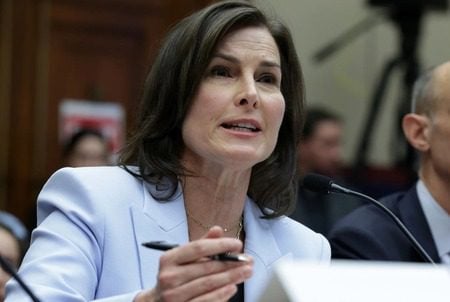
In a letter July 1 addressed to Shipman, which was first obtained by the Washington Free Beacon, committee chairs Reps. Tim Walberg of Michigan and Elise Stefanik of New York, both Republicans, lambasted Shipman.
The representatives accuse Shipman of expressing “distrust and dislike” for Shoshana Shendelman, a Jewish member of Columbia’s board of trustees who frequently condemned campus anti-Semitism.
In January, 2024, before Shipman became acting president and was then a trustee, Shipman wrote, “I just don’t think she should be on the board,” referring to Shendelman, the committee said.
In another message from April 2024 referred to in the committee’s letter, Wanda Greene, the vice chair of the board, asked Shipman whether she believed that Shendelman was “a mole? A fox in the henhouse?”
Shipman then allegedly agreed, stating, “I do,” to which Greene added, “I am tired of her,” and Shipman agreed, writing, “so, so tired.”
The exchanges about Shendelman, the committee letter stated, “raise the question of why you appeared to be in favor of removing one of the board’s most outspoken Jewish advocates at a time when Columbia students were facing a shocking level of fear and hostility.”
Shendelman, a pharmaceutical entrepreneur and Columbia alumna, was one of the most vocal trustees in demanding Columbia crack down on pro-Palestinian protests and address charges of antisemitism.
In an oped last month for Fox News, Shendelman said she was targeted by unnamed “media voices” for her advocacy around those issues.
“After voicing my concerns regarding anti-Semitism on campus, I became a target of certain media voices determined to erase decades of my work, service, and scholarship with a few calculated, malevolent strokes of a pen,” she wrote.
The committee also shared text messages they say indicate that Shipman had allegedly been in favor of adding an “Arab” person to the university’s board.
The letter quotes a message from January 2024, quoting Shipman as saying, “we need to get somebody from the middle east [sic] or who is Arab on our board.”
In the committee’s letter, they wrote that the remark about needing an Arab board member “raises troubling questions regarding Columbia’s priorities just months after the October 7th attack, which was the largest massacre of Jews since the Holocaust.”
“Were Columbia to … appoint someone to the board specifically because of their national origin, it would implicate TItle VI concerns,” the letter continued.
The letter comes as Columbia enters its fourth month of negotiations with the Trump administration after the federal government cancelled $400 million in grants to the school over campus antisemitism in March.
Later that month, Shipman replaced then-president Katrina Armstrong as the leader of the school amid escalating pressure from the Trump administration.
In May, Shipman authorized the mass arrests of pro-Palestinian protesters on Columbia’s campus, underscoring the school’s recent policy shifts towards protesters as a result of the federal government’s demands.
The committee letter also called out Shipman for a message sent on Oct. 30, 2023 to then-university president Minouche Shafik, saying Shipman appeared to downplay the presence of anti-Semitism on Columbia’s campus.
“People are really frustrated and scared about anti-Semitism on our campus and they feel somehow betrayed by it. Which is not necessarily a rational feeling but it’s deep and it is quite threatening,” the message from Shipman read.
Commenting on this message, the committee letter said, “Your description — that people feel ‘somehow’ betrayed and that this is ‘not necessarily a rational feeling,’ but that it is ‘threatening’ — is perplexing, considering the violence and harassment against Jewish and Israeli students already occurring on Columbia’s campus at the time.”
In a statement to JTA, Columbia claimed the messages had been taken out of context.
Shipman apologized. “The things I said in a moment of frustration and stress were wrong. They do not reflect how I feel,” Claire Shipman wrote in a private email obtained by Jewish Insider.
“I have apologized directly to the person named in my texts, and I am apologizing now to you,” Shipman wrote in her July 2 email.
“I have tremendous respect and appreciation for that board member, whose voice on behalf of Columbia’s Jewish community is critically important. I should not have written those things, and I am sorry.
“It was a moment of immense pressure, over a year-and-a-half ago, as we navigated some deeply turbulent times. But that doesn’t change the fact that I made a mistake. I promise to do better.
“One thing I hope salacious headlines will not obscure — my deep commitment to fighting antiSemitism and protecting our Jewish students and faculty.
“Board members who have worked with me for more than a decade know that anti-Semitism, and the culture on our campus, was a priority well before October 7th, as do colleagues at the university, and personal friends.”
Shipman included a link to the steps the school was taking to address anti-Semitism on its campus as the school enters its fourth month of negotiations with the Trump administration after the federal government cancelled $400 million in grants to the school over campus anti-Semitism in March.


