

By Israel Kasnett
Lebanon has once again reiterated its position: Palestinian refugees will not be granted citizenship. While proposals circulate in Beirut to improve Palestinians’ access to work permits, property ownership and residency rights, naturalization remains off the table.
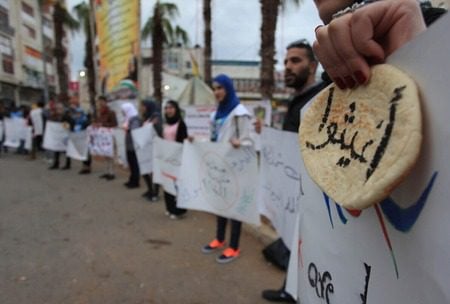
This refusal reflects a Lebanon-specific sensitivity — and also a policy shared across the Arab world, from Syria to the Gulf states.
Lebanon’s nationality law is rigid, anchored in its sectarian power-sharing system. The last official census effectively froze the demographic balance between Christians, Sunnis, Shiites and Druze.
As Jacques Neriah, a Middle East analyst at the Jerusalem Center for Security and Foreign Affairs, said, “Lebanon has a severe law of nationality mainly because of sectarian tensions. The last population census dates back to 1932 and nothing has changed since. The property between the different communities has not changed. This statistic is sanctified and nobody dares touch it.”
Naturalizing almost half a million Palestinian refugees and another million-and-a-half Syrian refugees would dramatically alter Lebanon’s sectarian arithmetic, provoking what Neriah calls “an earthquake in the representation of the different communities in the partition of power.”
This demographic concern is compounded by political intent. Leaving Palestinians stateless is designed to avoid permanent integration and reinforce the idea that refugees should one day return to Palestine and put a demographic end to Israel.
Lebanese resistance to naturalization is also rooted in historical scars. Palestinian militias, led by the PLO, dominated parts of Lebanon in the 1970s and 1980s, fueling the civil war and leaving deep resentment among many Lebanese.
Barak Bouks, a lecturer at Bar-Ilan University in Ramat Gan, underlined this dimension. “The Palestinians in Lebanon are living in refugee camps . . . The Lebanese did not forget the PLO’s brutal control of their country, accelerating the outbreak of the 1975 civil war,” he said.
Even today, Palestinian refugee camps in Lebanon such as Ain al-Hilweh operate with a degree of autonomy, hosting armed groups and smuggling networks.
The Lebanese army regularly conducts incursions into these camps, underscoring the perception that Palestinians remain a security challenge rather than a community to be embraced.
Citizenship — a ‘red line’
Lebanon’s policy is not unique. Most Arab states deny Palestinians citizenship, even after decades of residence and multiple generations born on their soil.
According to Neriah, “Most Arab countries follow the same pattern. In the Emirates, you have one million local citizens and more than 30 million foreigners.”
Granting citizenship is not the goal because Arab countries fear that assimilation could mean Palestinians settling more fully into an adopted country and a de facto recognition of Israel.
Syria gave Palestinians limited rights, though it stopped short of naturalization. In times of conflict Palestinians have been treated as outsiders and even as enemies.
Egypt has long denied Palestinians citizenship, limiting them to precarious residency arrangements.
The Gulf States make virtually no path available to citizenship for Palestinians or other long-term foreign residents, citing demographic protection and political sensitivities.
Jordan stands out as the one exception, granting citizenship to most Palestinians afterIsrael’s War of Independence in 1948. Yet even there, the relationship has been fraught, marked by the 1970 Black September civil war and subsequent restrictions on certain Palestinian populations.
Underlying this regional pattern is a political calculation: Naturalization would undermine the Palestinian “right of return.”
Arab governments note that full Palestinian integration in host countries would amount to acceptance that Palestinians will never return to their “ancestral lands.” Keeping them stateless preserves their identity, their political utility and their suffering.
Bouks highlighted how this logic extends beyond Lebanon.
“In Syria, President Assad’s regime placed the Yarmouk camp in Damascus under siege when Palestinians sided with rebels,” he said.
In Jordan, the PLO once threatened the monarchy itself. “Today, Queen Rania is Palestinian, meaning the heir to the throne will be half-Palestinian,” Bouks said.
These examples show how the Palestinian issue is both deeply integrated and deeply disruptive in Arab states.
However, in return for the Palestinians giving up weapons, Lebanon appears to have signaled some willingness to improve legal conditions, such as lifting restrictions on professions, reforming property law and formalizing residency rights.
But citizenship remains the “red line.”
In fact, in 2023, lawmakers considered proposals that would make it harder, not easier, for stateless people to obtain nationality, particularly those born to Syrian parents after 2011.
Indefinite exclusion
This leaves Palestinians in Lebanon in perpetual limbo: unable to own property freely, barred from many professions, restricted in movement, and dependent on UNRWA and foreign aid.
For many, it is a life without legal certainty, passed down from generation to generation and enforced by Arab governments.
Lebanon’s refusal to naturalize Palestinians reflects a wider Arab consensus shaped by fears of demographic imbalance, political instability and the loss of the “right of return.”
The result is a policy of indefinite exclusion, with Palestinians suspended between host states that will not integrate them.
As Neriah pointed out, “No Palestinian has been given citizenship in any Arab country because this would mean assimilation and de facto recognizing the ‘Zionist entity.’”


