

By Shira Li Bartov
As New York City woke up to a new mayor-elect on Nov. 5, Jewish groups that spurned Zohran Mamdani faced a decision — how to react to a leader whose staunch criticism of Israel flew in the face of their core beliefs.
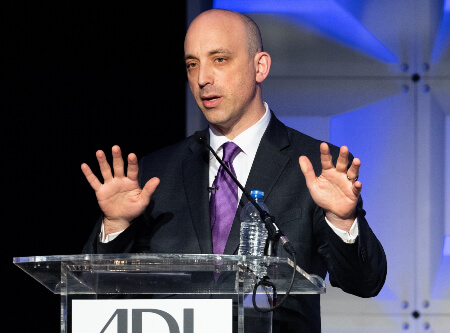
ADL chief Jonathan Greenblatt was one of the Jewish leaders whorailed against Mamdani throughout the race. Greenblatt convened a briefing to discuss how to grapple with the new administration.
Estimates of what percentage of many Jews voted for Mamdani range from 20% to 30%.
Greenblatt announced a “Mamdani Monitor,” a public tracker of Mamdani’s policies and personnel appointments that the ADL views as threatening Jewish security.
“We’re deeply concerned — the anti-Semitic language that he has promoted, the anti-Semitic policies that he’s championed, the anti-Semitic extremists who he’s known to affiliate with,” Greenblatt said.
“This mayor will not have our backs.”
Under Greenblatt’s leadership, the ADL has narrowed its civil rights mission to focus on combating antiSemitism and anti-Zionism.
Greenblatt said the ADL was closely watching Mamdani with a list of demands:
• no appointments of people with records of anti-Semitism;
• NYPD protection for synagogues and Jewish day schools; and
• “factual, unbiased education about the Middle East” in schools.
He also said it was “very important” to maintain NYPD partnerships with Israeli counterintelligence and counterterrorism efforts.
Hindy Poupko, the chief strategy officer at UJA-Federation of New York, said her organization was preparing to combat Mamdani policies if they aligned with BDS.
UJA hopes to lobby for broadening a state-level anti-BDS executive order, signed by Anthony Cuomo, so that it would apply to New York City.
“It would be devastating on many fronts — not to mention economically devastating for New Yorkers — if the Mamdani administration engaged in any kind of BDS activity,” said Poupko.
Mamdani was asked about Greenblatt’s proposed “Mamdani Monitor” in a press conference on Nov. 5.
“I think that anyone is free to catalogue the actions of our administration. I have some doubts in Jonathan’s ability to do so honestly, given that he previously said I had not visited any synagogues, only to have to correct himself.”
Asked if they would meet with Mamdani, both Greenblatt and Poupko gave qualified answers.
“I will not meet him on my own,” said Greenblatt. “I think we have a responsibility to our fellowship as Jews. I’m not going to do that meeting without UJA. I’m not going to do that meeting without some spiritual leadership as well.”
Poupko said, “The ball’s in his court.” If Mamdani takes actions to “put Jewish New Yorkers at ease,” then she said UJA leaders would meet him.
The New York Board of Rabbis and other leading Jewish institutions in the city said in a joint statement:
“We cannot ignore that the Mayor-elect holds core beliefs fundamentally at odds with our community’s deepest convictions and most cherished values.”
They added that they would continue to work with every level of government.
Rabbi Marc Schneier, who heads The Hampton Synagogue on Long Island and backed Cuomo, said he planned to establish the first Jewish day school in the Hamptons as a haven for “thousands of Jewish families” fleeing “the anti-Semitic climate of Mamdani’s New York City.”
The Republican Jewish Coalition called Mamdani’s victory “a deeply distressing result for New Yorkers, particularly Jewish New Yorkers. There is only ONE party in this country fighting anti-Semitism and supporting Israel, and it is the Republican Party.”
Other past critics of Mamdani seemed ready to put the election behind them.
The pro-Israel billionaire Bill Ackman, whose protracted attacks on Mamdani during the campaign often predicted an apocalyptic city under his leadership, appeared to offer an olive branch just hours after predicting Cuomo would prevail.
“Congrats on the win,” Ackman said to Mamdani on X. “Now you have a big responsibility. If I can help NYC, just let me know what I can do.”
The Union for Reform Judaism, which urged its rabbis not to endorse candidates despite intense pressure from congregants, pressed Jews to “help lower the temperature, listen generously, and take steps to promote healing” in the aftermath of the election.
“Reasonable people across the political spectrum — and across the Jewish community — must aspire to respectfully disagree, and we will do our part to bring people together without erasing real differences,” the group said.
The URJ said it would “not hesitate to push back if anti-Israel policies or rhetoric make Jewish New Yorkers who are deeply attached to Israel more anxious and less safe.”
Jewish Voice for Peace and Jews for Racial and Economic Justice celebrated the victory at Mandain’s watch party on Tuesday night, Nov. 4.
Estimates of what percentage of many Jews voted for Mamdani range from 20% to 30%.


